
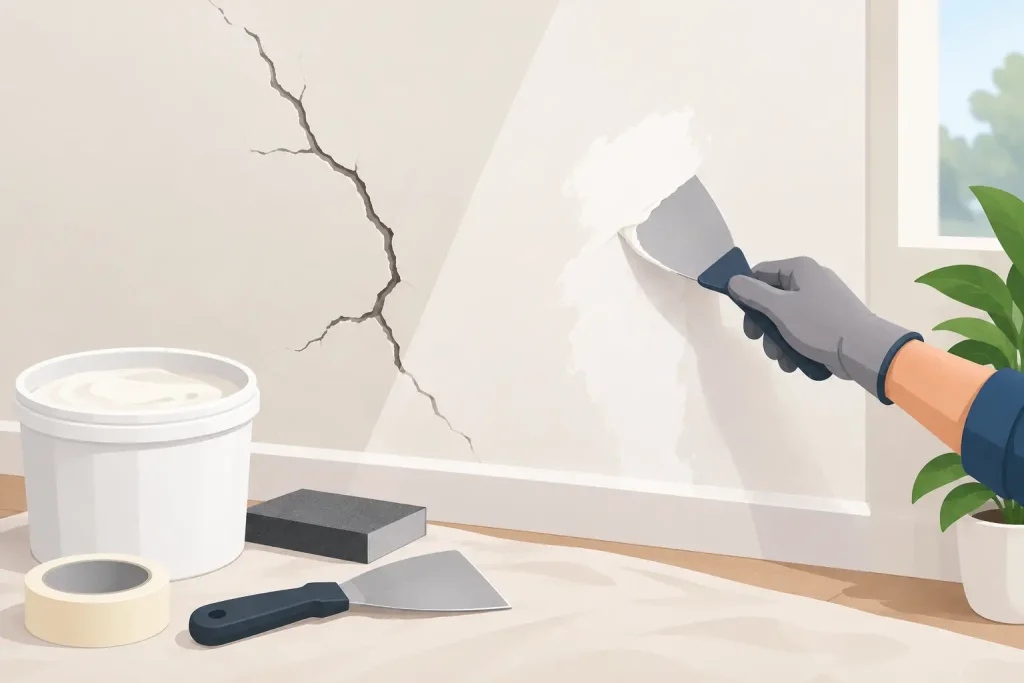
A crack across a newly decorated wall is frustrating. A crack that keeps returning is a sign that filling and painting over it has not dealt with the real problem. The best solutions cracked plaster requires depend on why it has cracked, how deep the damage goes and whether the surface is still sound.
Some cracks are no more than normal settling or minor shrinkage. Others point to loose plaster, movement in the building, moisture or a failed previous repair. Getting that distinction right is what separates a neat, lasting repair from a job that looks tidy for a few months and then reappears.
Best solutions for cracked plaster start with the cause
Plaster does not usually crack without a reason. Older properties naturally move a little through changing temperatures, seasonal moisture and everyday use. Newer extensions can also show cracks as materials dry and settle. A fine, straight hairline crack is often less serious than it looks, particularly around openings, joins and corners.
Wider cracks, diagonal cracks, or cracks that have appeared suddenly deserve closer attention. So do cracks with staining, bubbling paint, a powdery surface or a hollow sound when the wall is tapped. These can indicate that the plaster has lost its bond to the background, or that damp is affecting the wall behind it.
Before any repair starts, look for patterns. Is the crack only in the finish coat, or can you see a deeper split beneath it? Does it run from the corner of a door or window? Has it opened up again after being filled? Is there a leak, overflowing gutter or external render defect allowing water into the structure? The repair needs to match the cause, not just the visible line.
Fine surface cracks
Small hairline cracks in otherwise firm plaster are often the most straightforward to deal with. The area should be opened slightly to remove weak edges and give the repair material something sound to grip. Once dust is cleared, a suitable filler or finishing compound can be worked into the crack, allowed to dry properly, then sanded carefully before decorating.
Simply wiping filler across an unopened crack can leave a very thin repair that soon breaks away. Preparation takes a little longer, but it is what gives the finished surface a clean result.
Cracks at plasterboard joints
Cracks along a straight line on a ceiling or partition wall are commonly found at plasterboard joints. This may be due to movement in the boards, failed joint tape or an unsuitable repair carried out previously. Re-filling over the top rarely holds if the joint itself has moved.
The affected section normally needs to be cut back, re-taped where required and re-finished with the correct materials. If the ceiling has sagged, feels soft or shows several joint failures, it is worth checking the fixing and condition of the boards before any surface repair is attempted.
When a simple fill is not enough
A crack is only one part of the issue when plaster sounds hollow, crumbles under light pressure or comes away from the wall. In these cases, the loose material needs removing back to a firm edge. Trying to save blown plaster usually means building a repair on an unstable base.
The exposed background is then assessed and prepared before new plaster is applied. Depending on the size and depth of the area, this may involve a backing coat followed by a smooth finish coat. Blending the repaired section into the surrounding wall takes care, especially where light from a window will show every ridge and trowel mark.
For broad areas of failed plaster, patching each individual crack can become false economy. Skimming the affected wall or ceiling may provide the better finish, provided the background is dry, secure and properly prepared. It creates a consistent surface for decorating rather than leaving a series of visible repaired patches.
Deal with damp before replastering
Damp-related cracking cannot be fixed properly from the inside alone. If water continues to enter through defective render, cracked masonry, damaged seals, roof problems or leaking pipework, fresh plaster will eventually stain, soften or fail as well.
Signs to watch for include peeling paint, dark patches, salt deposits, mould growth and a musty smell. The source of moisture must be identified and resolved first. The wall also needs sufficient time to dry before replastering. Rushing this stage risks trapping the problem behind a smart new finish.
External walls need particular attention. Cracked, tired render can allow water into the wall while making the property look neglected. Once any underlying defects have been repaired, a suitable external finish can protect the building and improve its appearance. For some homes, a cork spray finish is worth considering as an alternative to conventional render, particularly where weather resistance and flexibility are priorities.
Movement cracks need an honest assessment
Most minor movement is part of a building settling and does not automatically mean a structural problem. However, a crack that is widening, runs diagonally from a window or door opening, appears both inside and outside, or is accompanied by sticking doors and windows should not be treated as a standard plaster repair straight away.
The cause should be investigated before cosmetic work begins. That may mean checking drainage, nearby trees, roof spread, altered openings or other building issues. Where there is concern about structural movement, seek appropriate professional advice. Once the movement has been addressed or confirmed as stable, the plaster repair can be planned with far more confidence.
This is one area where a quick fix is rarely good value. A well-prepared repair can cope with minor movement, but no filler or skim coat will solve an active structural issue.
The right repair depends on the wall
There is no single product that suits every crack. Fine finish cracks may only need careful filling and preparation. Deeper but stable cracks may need reinforcing before plastering. Loose or hollow areas need removing and rebuilding. Moisture damage requires the source to be put right first.
The age and construction of the property also matter. Solid walls, plasterboard partitions, previously rendered external walls and ceilings all behave differently. A repair should be chosen for the background, the location and the final finish required.
For example, a small repair behind furniture may not justify replastering an entire room. A crack across a main living-room wall, where afternoon light picks up every imperfection, may need a wider skim for a properly even result. It depends on the condition of the surface and the standard of finish you expect.
Why preparation makes the difference
Good plastering is not just about applying material smoothly. The surface has to be sound, clean and suitably prepared. Loose paint, failing filler, dust, salts and unstable edges all reduce adhesion. Corners and joins may require reinforcement to reduce the risk of cracking returning.
Drying times matter too. Filling, plastering and decorating too quickly can lead to shrinkage marks, staining or poor paint adhesion. A professional repair is planned around the materials and conditions on site, rather than forced through to meet an unrealistic timescale.
Clean working is part of the job as well. Floors, furniture and adjacent finishes should be protected, and the area left ready for the next stage of decorating. A sound repair should not come at the cost of dust and damage elsewhere in the room.
When to call in a plasterer
A homeowner can often deal with a very small, stable hairline crack. It is sensible to bring in a plastering specialist when cracks are recurring, the plaster is loose, damage is widespread, a ceiling is affected, or the repair needs to blend invisibly with an existing wall.
It is also worth getting a professional view before decorating a room with several defects. A proper assessment can prevent money being spent on paint and preparation only for cracks to show through again. At Lee Crane Plastering, the focus is on identifying what has failed, preparing the area correctly and leaving a finish that is ready to live with.
A cracked wall does not always mean a major repair, but it does deserve the right one. Deal with the cause first, choose the repair to suit the surface, and you will have a far better chance of a finish that stays smooth long after the paint has dried.