
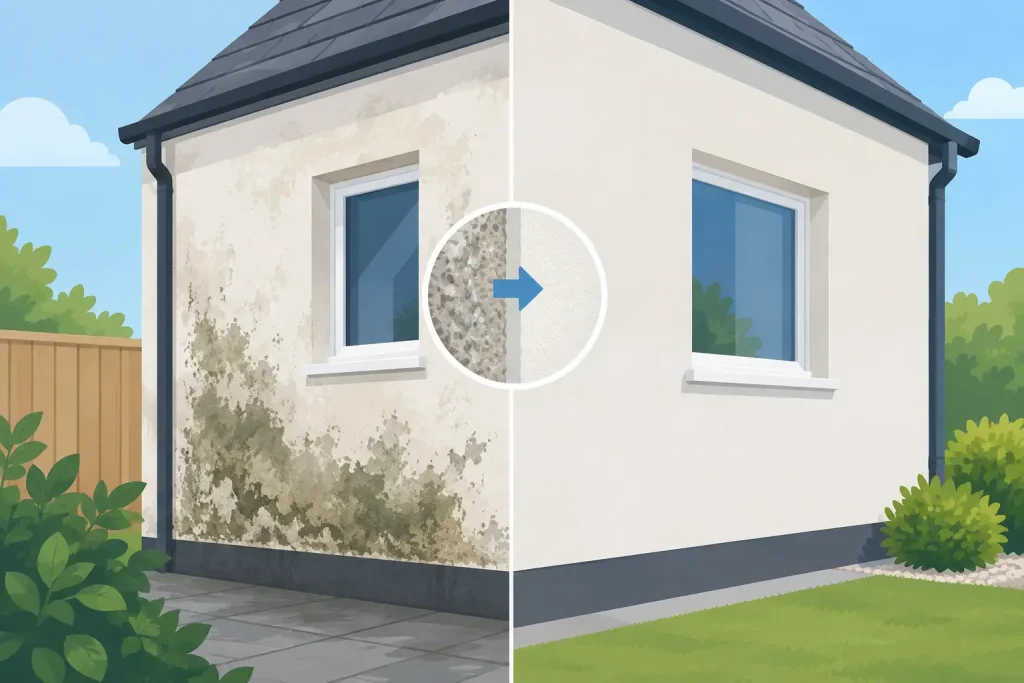
A freshly rendered wall can make a damp property look better for a while, but appearances can be misleading. So, can rendering cure damp? Not on its own. Rendering can protect an exterior wall once the source of moisture has been found and dealt with, but applying a new finish over an active damp problem often hides it rather than solves it.
That matters because trapped moisture can lead to blown render, peeling paint, staining inside the house and further damage to the wall beneath. The right job starts with diagnosis, not a quote for a quick cover-up.
Can rendering cure damp on an exterior wall?
Rendering can help prevent rainwater getting into a wall where the existing finish has failed. Cracks, hollow patches, loose render and open joints can all allow water to track behind the surface. In those cases, removing defective material, repairing the background properly and applying a suitable new exterior finish can form an important part of the solution.
However, render is not a cure for every type of damp. If moisture is rising from below, entering through damaged gutters, coming from a leaking pipe, or building up through condensation indoors, a new rendered finish will not remove the cause. In some situations, a dense or poorly chosen finish can make matters worse by slowing down the wall’s ability to dry.
The honest answer is that rendering is a repair and protection measure, not a magic damp treatment. It works well when it is part of a properly planned repair.
First, work out where the moisture is coming from
Damp is a symptom. Before any external rendering work begins, the source needs to be identified. A wall that feels damp inside is not automatically suffering from rain penetration, and a crack in render is not automatically the reason for every stain.
Rainwater penetration is common where render has cracked or detached, particularly around window openings, pipes, rooflines and exposed elevations. Water can get behind the finish through surprisingly small gaps, then spread through the wall and show up indoors some distance from where it entered.
Defective rainwater goods are another frequent cause. A leaking gutter, blocked downpipe or overflowing hopper can soak the same section of wall every time it rains. Re-rendering that area without correcting the guttering simply puts a new finish in the firing line.
Problems at ground level also need checking. External ground levels should not bridge the damp-proof course or sit too high against the wall. Splashback from hard surfaces, damaged drainage and soil piled against the property can keep the base of a wall wet. These issues must be addressed before a new exterior finish is applied.
Condensation is different again. It is usually linked to warm, moisture-laden air meeting cold internal surfaces, often in bathrooms, kitchens, bedrooms and poorly ventilated rooms. Signs include mould growth, water on windows and dampness that is worse in colder weather. External rendering may improve the condition of an exposed wall, but it will not replace adequate ventilation, heating habits or extraction.
When new rendering is the right repair
New render can be a sound long-term investment when the existing render has reached the end of its life and is allowing weather into the property. Typical signs include cracks that return after patching, hollow-sounding areas, crumbling surfaces, failed paint coatings and render that has pulled away from the wall.
The quality of preparation makes the difference. Loose or damaged render needs removing back to a stable background. Cracks need more than a smear of filler if there is movement or poor adhesion behind them. Details around openings, corners, pipe penetrations and the base of the wall need careful attention, as these are the places where water commonly finds a route in.
The replacement system also has to suit the building and the condition of the wall. A finish should shed rain effectively while allowing the wall to dry as intended. This is why a site assessment is more useful than choosing a finish from a photograph. The same material is not right for every property.
For homeowners who want an updated appearance as well as weather protection, a modern cork spray finish can be worth discussing. It provides a flexible, textured external coating and may be suitable for certain elevations where a lighter, weather-resistant finish is required. As with any exterior system, the wall must be sound and underlying water issues must be resolved first.
Why rendering over damp walls can fail
Putting new render directly over a damp or contaminated surface can create a tidy-looking problem that soon returns. The moisture remains in the wall, and salts or poor adhesion can affect the new finish. As the wall tries to dry, the render may stain, crack, blister or come away in patches.
There is also a risk of sealing in water that has entered from elsewhere. If a roof defect, gutter leak or high external ground level is still feeding moisture into the wall, covering the elevation with a new finish does nothing to stop that water. The damage may simply become harder to see until it is more serious.
This is why cheap patch repairs can be false economy. A small repair is perfectly reasonable where the defect is local and the surrounding render is sound. But if most of the wall is hollow, heavily cracked or repeatedly damp, patching isolated sections may not give a reliable result. A professional assessment should distinguish between a repairable local defect and a finish that needs replacing.
What a proper damp and render assessment should cover
A good assessment is practical. It starts by looking at the wall, but it should not stop there. The surrounding parts of the property often explain why a render finish has failed.
The condition of gutters, downpipes, roof edges, window seals, exterior pipework and ground levels should all be considered. The wall should be checked for hollow areas, cracking patterns, failed previous repairs and signs that moisture is entering from above or below. Inside, the position and pattern of staining can provide useful clues too.
It is also worth considering the age and construction of the property, how exposed the elevation is to wind-driven rain, and whether the issue appears only after wet weather. A north-facing wall that stays cold and shaded can behave differently from a sheltered rear elevation. There is no honest one-size-fits-all answer.
Once the cause is clear, the work can be planned in the right order. Fix water entry points first, allow the area to dry where needed, remove unsound material, prepare the wall carefully and apply a finish that is appropriate for the property. That sequence protects both the appearance and the lifespan of the completed work.
Can internal plastering fix damp marks?
Internal plaster repairs should usually come after the source of moisture has been stopped. Replastering over a damp wall may improve the room briefly, but stains, salts and blown plaster can return if the exterior defect or ventilation issue remains.
Where water has damaged internal finishes, the affected plaster may need to be removed and the wall allowed to dry before repairs are made. The right timing depends on how wet the wall is, what caused the damage and whether the issue is ongoing. Rushing the final finish is rarely worthwhile.
For landlords and homeowners preparing a property for sale or letting, this can be frustrating. It is tempting to make the marks disappear quickly. But a clean, durable finish comes from dealing with the cause first, not just covering the evidence.
The practical next step
If you have damp patches alongside cracked, loose or tired exterior render, arrange for the property to be inspected before booking cosmetic work. Take note of when the problem worsens, whether it follows rainfall, and whether gutters overflow or leaks are visible. Those details can help pinpoint the cause.
For properties in Braintree, Essex and the surrounding area, Lee Crane Plastering can assess defective external finishes and advise on a suitable repair or replacement approach. The aim should always be a neat, durable result that protects the wall rather than merely hiding what is happening behind it.
A sound wall starts with stopping the water at its source. Once that is done, professional rendering can give the property the weather protection and finish it deserves.