
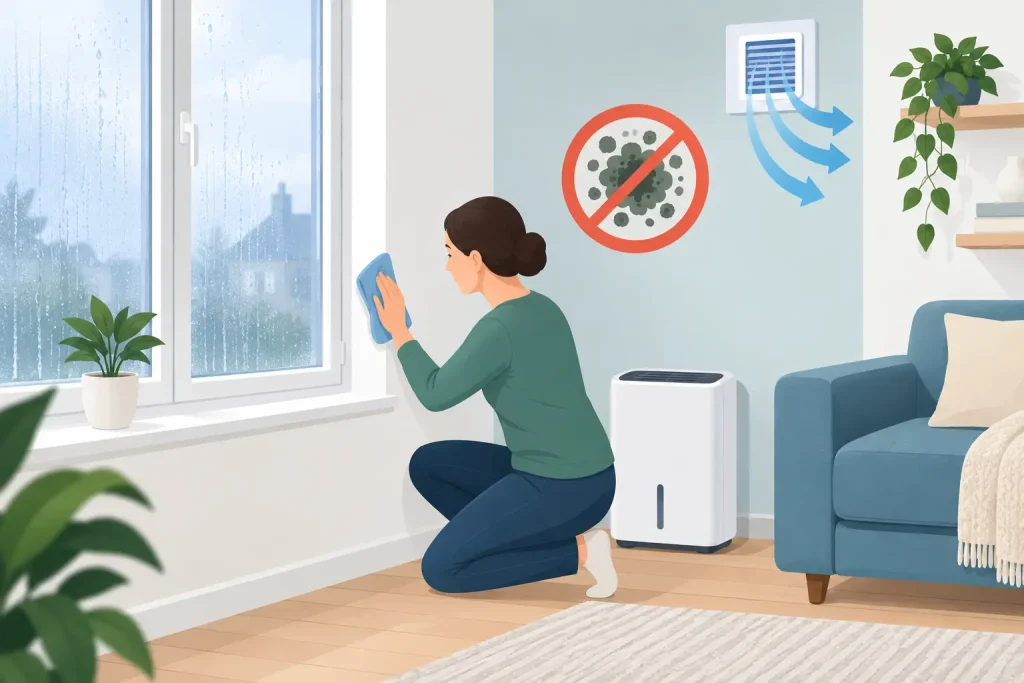
Condensation mould often starts as a few dark specks in a bathroom corner, behind a wardrobe or around a window reveal. Left alone, it can spread across paintwork, stain plaster finishes and create a damp, unpleasant room. Knowing how to prevent condensation mould is less about one miracle product and more about controlling the moisture that builds up in everyday life.
Cooking, showering, drying clothes and simply breathing all put water vapour into the air. When that warm, moist air meets a cold surface, such as external walls, windows or poorly insulated corners, it turns into water droplets. Mould has exactly what it needs to grow: moisture, a cool surface and limited airflow.
How to prevent condensation mould by controlling moisture
The first job is to reduce the amount of moisture left hanging in the air. This does not mean making a home cold or draughty. It means giving moist air a clear way out before it settles on walls and ceilings.
Use extractor fans whenever you shower or cook, and leave them running for a while afterwards if they have an overrun setting. A fan that is noisy, weak or not venting outside is not doing the job properly. Bathroom windows should be opened after bathing where practical, and kitchen lids should stay on pans while cooking.
Drying laundry indoors is a common cause of condensation, particularly in smaller homes and during winter. If a tumble dryer is used, make sure it is correctly vented or is a condenser type that is emptied regularly. Where clothes must be dried indoors, choose one room, keep the door shut and ventilate that room. A dehumidifier can be very useful here, but it manages the symptom rather than replacing ventilation or fixing a cold wall issue.
Avoid blocking air bricks, trickle vents or permanent ventilation openings. They may seem like a source of cold air, but closing them can trap moisture indoors and make mould more likely.
Keep rooms steadily warm
A home that is allowed to become very cold is more prone to condensation. Cold surfaces reach the dew point quickly, so moisture in the air settles on them rather than remaining as vapour.
A steady background temperature is usually better than short bursts of high heat followed by a long period with the heating off. The right approach depends on the property, insulation levels and how the house is occupied, but keeping regularly used rooms at a consistent temperature helps external walls and window surrounds stay warmer.
Try not to heat one room heavily while leaving adjoining rooms completely cold. Warm air naturally moves through the property and can condense in the colder space. Keep internal doors managed sensibly and give unused rooms a little background heat during colder spells.
Furniture also needs breathing space. Large wardrobes, sofas and beds pushed tightly against external walls restrict airflow, making those areas noticeably cooler. Leave a small gap where possible, especially in bedrooms, and check behind furniture from time to time. This is one of the most common places for mould to go unnoticed until it has marked the wall.
Ventilate at the right time
Opening a window for a few minutes can be more effective than leaving it slightly open all day. Short, purposeful ventilation lets moisture escape without allowing the whole building fabric to cool down.
After a shower, open the bathroom window or use the extractor fan with the door closed. After cooking, ventilate the kitchen rather than allowing steam to travel into hallways and bedrooms. In the morning, bedrooms benefit from fresh air because moisture builds up overnight from breathing.
It is worth checking that extractor fans are clean and working as intended. Dust-clogged grilles reduce airflow, while a fan that stops as soon as the light goes off may not run for long enough. A properly specified, externally vented fan is a far better solution than relying solely on an open window in a cold or rainy spell.
Do not mistake leaks for condensation
Not every mould problem is caused by condensation. A localised damp patch that remains wet, worsens after rainfall, has tide marks or causes plaster to soften may point to water getting into the building. Leaking gutters, cracked render, failed sealant around openings, defective roof coverings and plumbing leaks all need attention at source.
Condensation mould is usually surface-level and often appears in cold corners, around windows, on ceilings near external walls or behind furniture. Penetrating damp tends to be more isolated and may continue even when the room is well ventilated.
If the cause is unclear, do not simply wash and repaint the affected area. Covering over damp plaster or a recurring moisture problem rarely lasts. The surface needs time to dry, and the reason for the moisture must be identified first.
Clean mould safely, then address the cause
For small areas of surface mould, wear gloves and protect your eyes. Use a suitable mould remover according to the manufacturer’s instructions, or wipe the area carefully with a damp cloth and dispose of it afterwards. Avoid dry brushing, as this can release spores into the room.
Once clean, dry the area fully. If the paint has failed, bubbled or repeatedly marked, it may need preparing and redecorating after the moisture issue has been resolved. In more serious cases, plaster can become stained, friable or detached from the background. At that point, a proper assessment is worthwhile before any repair work begins.
Do not assume anti-mould paint will solve an active condensation issue. It can be a useful finishing product in high-moisture rooms, but it cannot compensate for poor extraction, a leaking gutter or an unheated cold wall. A good finish depends on a dry, sound surface beneath it.
Pay attention to windows, external walls and insulation
Windows are often the first place condensation becomes visible because glass is colder than the surrounding wall. Wipe down wet windowsills in the morning to prevent water sitting on timber, sealant and plaster edges. However, persistent condensation on windows is a sign that indoor humidity is too high, not just a cleaning problem.
Cold external walls can be harder to manage, particularly in older properties or rooms with limited insulation. Improving insulation may make a significant difference, but it must be planned properly. Poorly designed work can shift the cold spot elsewhere or trap moisture within the wall build-up.
The outside of the property matters too. Sound external finishes help keep rain out and protect the wall beneath, while cracks, failed joints and damaged render can allow water to add to the problem. This is separate from condensation, but the two issues can exist together and make diagnosis more difficult.
For homeowners in and around Braintree, a professional inspection can help distinguish a surface condensation problem from defects in external render, damaged plaster or moisture entering through the building fabric. It is always better to repair the cause before investing in a new internal finish.
A practical routine that prevents mould returning
Prevention works best when it becomes part of normal household routine. Use extraction when creating steam, ventilate rooms briefly after high-moisture activities, keep the home at a sensible steady temperature and avoid packing furniture tight against cold walls. Empty dehumidifiers regularly if you use one, and check window ledges, corners and backs of wardrobes before marks have time to spread.
If mould returns in the same place despite these measures, treat that as useful evidence. It may show that ventilation is inadequate, a wall is unusually cold or there is a building defect that needs professional attention. A clean, dry wall is not just better to look at – it gives every plastered and painted finish the best chance of lasting properly.