
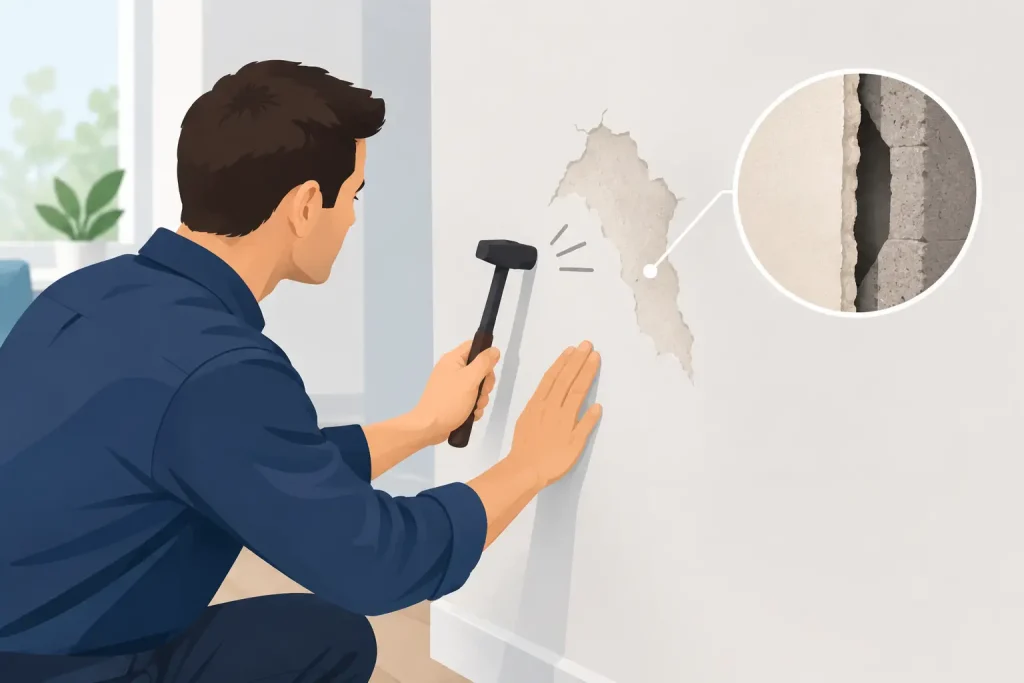
A wall can look perfectly sound until a picture hook pulls away, a hairline crack opens up, or a section of ceiling starts to sag. Knowing how to spot hollow plaster early gives you a chance to deal with a local repair before loose material becomes a larger, messier job.
Hollow plaster is usually a sign that the plaster coat has lost its bond with the surface behind it. It may still look intact from the room, but the bond that holds it in place has weakened or failed. The key is to check carefully without turning a small problem into a bigger one.
What does hollow plaster sound and feel like?
On a traditionally plastered solid wall, sound plaster should give a firm, dull response when lightly tapped. A hollow area often produces a noticeably sharper, more drum-like sound. This is commonly called a sounding test.
Use your knuckles or the handle of a screwdriver and tap gently across the suspected area. Start on a part of the wall that appears sound, then work towards the crack, stain or damaged section. The change in sound is usually clearer when you compare nearby areas rather than tapping one spot in isolation.
Do not hit the wall hard. Heavy tapping can dislodge plaster that was only just holding on, particularly on an older ceiling. The aim is to identify a difference in sound, not to prove how loose it is.
Hollow plaster can also feel slightly springy under very light hand pressure. You may notice fine cracks moving when the wall is pressed, or a faint crunching sound from loose material behind the finished surface. If the plaster moves at all, stop pressing it. That section needs proper attention rather than further testing.
Visible signs that plaster may be loose
The tap test is useful, but visible clues often point you to the right area first. Look closely around cracks, window reveals, chimney breasts, external corners and places where damp has previously occurred.
Common warning signs include:
- Cracks that spread across a wall or form a rough outline around a loose patch.
- A bulge, dip or uneven area that was not there before.
- Flaking paint or a fine powder appearing beneath a crack.
- Plaster that sounds hollow in a concentrated area around damp staining.
- Ceiling cracks, sagging, or movement around light fittings and coving.
A crack alone does not always mean the plaster is hollow. Fine straight cracks can come from normal movement, drying, or old decorating layers. A crack combined with a hollow sound, bulging or movement is more likely to indicate a failed bond.
How to spot hollow plaster on walls and ceilings safely
Begin with a visual inspection in good natural light where possible. Light coming across the wall from a window can reveal slight bulges and surface changes that are easy to miss under a central ceiling light. Mark any suspect areas lightly with low-tack tape rather than pencil, especially if you are unsure whether the surface will be repaired.
Next, carry out a gentle tap test around the marked area. Work methodically in a grid, comparing each section with the plaster beside it. If the hollow sound extends well beyond the visible crack, the loose section may be larger than it first appears.
Ceilings require more caution. Stand clear of the area directly below any obvious sagging, cracking or staining, and do not push upwards to test it. If a ceiling has dropped, feels loose, or shows a long widening crack, keep people out of the immediate area until it has been assessed. Loose ceiling plaster can fall without much warning.
Be aware that not every hollow sound is a defect. Plasterboard fixed on a stud wall will often sound hollow because there is a void behind the board. This is normal. Likewise, plasterboard fitted with adhesive dabs can have spaces behind it by design. In these cases, look for movement, cracking, popped fixings or water damage rather than relying on sound alone.
Why plaster becomes hollow
The cause matters because a repair will only last if the underlying issue has been dealt with. Water is one of the most common reasons plaster loses its bond. A leaking gutter, failed external finish, plumbing leak, condensation problem or damaged roof covering can allow moisture into the wall or ceiling. Even after the visible stain has dried, the plaster may remain weak and detached.
Age can also play a part. Over many years, movement in the building, vibration, repeated temperature changes and previous repairs can weaken the bond between plaster coats or between the plaster and background. Older properties may have local areas of loose plaster that have gradually developed rather than failed suddenly.
Poor preparation during earlier work is another frequent cause. If the background was dusty, painted, too smooth, damp, or not properly prepared before plastering, the new coat may never have formed a reliable bond. This can show up months or years later as hollow patches, cracking and delamination.
On external walls, water ingress should always be taken seriously. Repairing internal plaster without resolving the issue outside can lead to the same damage returning. A site inspection should consider the wall as a whole, not just the mark left inside the room.
When can hollow plaster be repaired?
It depends on how extensive the problem is and what sits behind the plaster. A small, isolated hollow patch with sound edges can sometimes be carefully removed, prepared and patched. The repair then needs to be blended properly so it does not leave a proud edge or an obvious change in texture once painted.
Where the hollow area is widespread, cracked, damp-damaged or moving, patching around it is often a false economy. The loose material needs removing back to a firm edge before the background can be assessed and prepared for a lasting repair. Trying to fill over detached plaster may improve the appearance briefly, but it does not restore the bond behind it.
Ceilings usually warrant a more cautious approach. Small cracks can be repaired where the surrounding material is firm, but widespread hollow plaster or sagging needs professional assessment. The right method may involve removing unsafe sections and reinstating the surface rather than attempting to hold failed material in place.
What not to do with loose plaster
Avoid drilling into a suspected hollow area to hang shelves, curtain poles or heavy pictures. A fixing may feel secure initially but pull free when the plaster breaks away. Find a sound background or suitable structural fixing point instead.
Do not cover cracks with thick filler and assume the job is finished. If the plaster is detached, the crack will usually return as the loose area continues to move. Equally, avoid sealing over damp patches before finding the source of moisture. Paint can hide the symptom, but it cannot fix water ingress.
Take extra care with older textured coatings. If you plan to sand, scrape or remove a textured finish applied before 2000, arrange suitable testing first, as some historic coatings may contain asbestos. Do not disturb material unnecessarily until you know what you are dealing with.
When to call a plasterer
A professional inspection is sensible when the hollow sound covers a large area, the plaster is visibly bulging, cracks are widening, or there has been water damage. It is particularly important for ceilings, around electrical fittings, and on walls where you need to fit heavy items.
A skilled plasterer can identify whether the issue is loose plaster, a normal plasterboard void, failed previous work or an underlying damp problem. They can then remove only what needs to come off, prepare the surface correctly and leave a clean, flat finish ready for decorating.
For homeowners and landlords, acting when the first signs appear is usually the practical option. A small local repair is easier to control than waiting for loose plaster to fail, damage furnishings or hold up the rest of a refurbishment. If a wall or ceiling does not feel right, trust the warning signs and have it checked before decorating over it.