
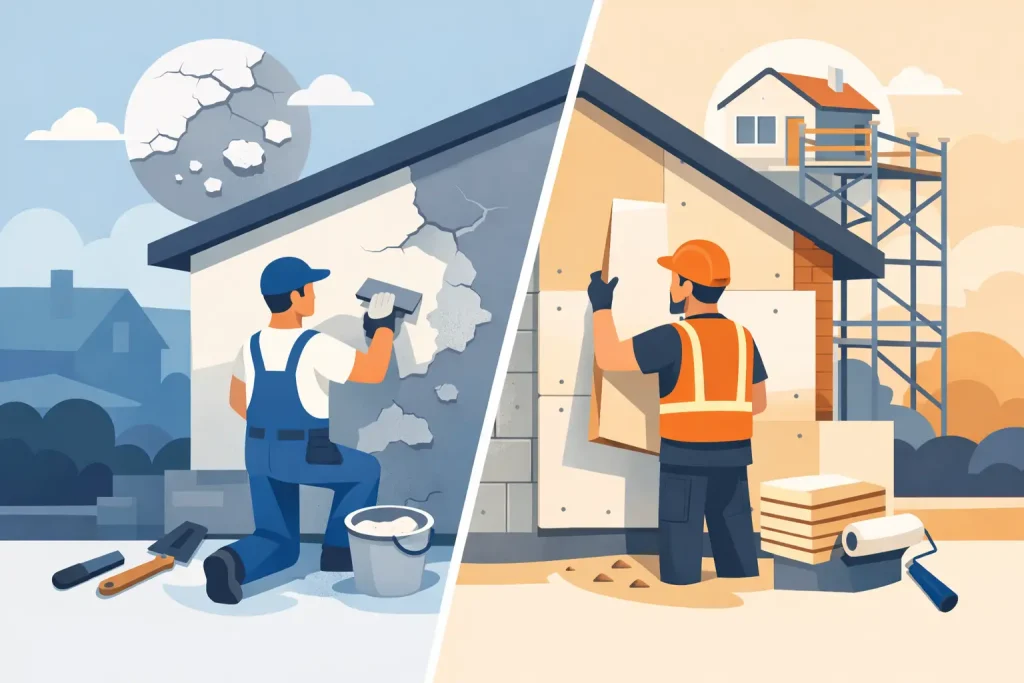
A thin crack beside a window, a hollow-sounding patch or a stained area below the roofline can make a property look tired quickly. The question of render repair vs replacement is not simply about making the wall look better for now. It is about finding out whether the existing finish is still doing its job of protecting the building from weather and moisture.
A well-matched local repair can be the sensible answer where damage is limited and the rest of the render is sound. Where failure is widespread, however, patching can become false economy. A proper assessment looks beyond the visible defect before recommending either route.
When render repair is the sensible choice
Render repairs work best when there is a clear, local cause and the surrounding render remains firmly bonded to the wall. This may be damage from an impact, a small settlement crack, a failed area around a pipe, or an isolated patch where water has got in.
Before repairing, the cause needs dealing with. There is little value in filling a crack below a leaking gutter if water will continue running down the wall. Equally, a crack around a window may need the joint or sealant addressed, rather than simply covering the movement with more render.
A good repair involves removing all loose or blown material back to a sound edge, preparing the background correctly and rebuilding the affected area in suitable layers. The finish then needs to be blended as closely as possible with the existing texture and colour. On an older wall, an exact invisible match is not always realistic, particularly where the original render has weathered over time. A professional repair should still look neat, sit flush and prevent water getting behind the finish.
Repair is often worth considering when:
- cracking is fine, isolated and not continuing to spread;
- render sounds solid when lightly tapped around the damaged area;
- the wall is otherwise dry, stable and free from widespread staining;
- the problem has an obvious, fixable cause; and
- the existing finish is in reasonable condition across most elevations.
For landlords and homeowners preparing a property for sale or tenancy, a targeted repair can also be a practical way to resolve a contained defect without committing to a full exterior project.
Signs that replacement may be the better investment
Replacement becomes more likely when the issue is not one patch but the condition of the render system as a whole. Large areas that sound hollow when tapped, repeated cracking, loose corners, bubbling paint and damp marks internally can all point to a finish that has lost its bond or is allowing water through.
It is tempting to keep repairing visible faults one at a time. The trouble is that each patch joins onto ageing material of uncertain condition. If several repairs have already been carried out, the wall can end up looking uneven while the underlying failure continues elsewhere.
Full replacement means stripping failed render where required, inspecting the substrate and correcting defects before a new external finish is applied. This gives the wall a consistent finish and allows the chosen system to be installed properly rather than trying to make new material work around old weaknesses.
Replacement may be the right call where there is widespread deterioration, persistent moisture penetration, major cracking caused by movement, or a dated finish that no longer meets the appearance and performance expected from the property. It is also worth considering when a renovation project includes new windows, roofline work or other alterations that would leave many small areas to make good.
Render repair vs replacement: the costs behind the quote
Repair will usually cost less upfront because less material and labour are involved. That does not automatically make it cheaper over the life of the wall. A small repair that solves a one-off issue is good value. A series of repairs to a failing elevation can cost more in the long run than tackling the problem properly once.
Replacement is a larger investment because it involves more preparation, access arrangements, waste removal and material. The price should reflect the condition of the existing wall, how much has to be removed, the detail around openings and whether repairs to the background are needed first. A square metre rate on its own rarely tells the full story.
The best comparison is not a repair quote against a replacement quote in isolation. Consider the likely lifespan of each option, the risk of further defects, the appearance of the finished property and the disruption involved. If the home will remain occupied, phased work may also be possible depending on the elevation and the scale of the job.
Do not ignore the cause of cracks and damp
Render is often blamed for problems that begin elsewhere. Defective gutters, leaking downpipes, damaged flashing, failed seals around windows and poor drainage can all send water where it should not be. Re-rendering without addressing these issues only hides the symptoms temporarily.
Cracks need the same common-sense approach. Very fine surface crazing may be mainly cosmetic, while wider or stepped cracks can indicate movement in the wall behind. If a crack is widening, reappears after repair or runs through brickwork and openings, it needs closer investigation before any finish is applied.
Internal damp patches should not be assumed to come from external render either. Condensation, plumbing leaks and ventilation issues can produce similar signs. A proper inspection considers the whole area rather than making a quick judgement from one mark on an internal wall.
Choosing the right finish for a replacement project
If replacement is needed, it is a chance to choose a finish suited to the property rather than simply copying what was there before. Traditional render finishes can provide a clean, smart appearance when applied to a sound, well-prepared background. The right preparation and detailing are what make the difference to durability.
For homeowners looking for a more flexible, low-maintenance external finish, cork spray can be worth discussing. This type of coating can provide a decorative finish while helping to deal with minor surface movement and reduce the hard, brittle feel associated with some older render finishes. Suitability depends on the property, the existing substrate and the condition of the walls, so it should be assessed rather than treated as a one-size-fits-all answer.
Colour choice matters too. A fresh pale finish can brighten a property, but very light colours may show staining in exposed locations. Darker colours can look striking, although they may absorb more heat on sunny elevations. The practical details – drips, beads, joints and neat edges around windows – matter just as much as the main finish.
What a proper site assessment should cover
A useful quotation starts with inspecting more than the most obvious crack. The condition of each elevation, the soundness of the render, signs of moisture, access requirements and the detailing around doors, windows and rooflines should all be considered.
You should receive a clear explanation of what is being repaired or removed, why that work is necessary and what finish is proposed. If an area is being patched, ask how the new work will join the existing render and how close the finish is likely to match. If replacement is recommended, ask whether the underlying wall will be checked and repaired before the new finish goes on.
At Lee Crane Plastering, the aim is to recommend the level of work the wall genuinely needs, not automatically sell the largest job. Sometimes that is a neat, durable repair. Sometimes the honest answer is that the old finish has reached the end of its useful life.
A sound exterior should protect the property and look properly finished, not leave you waiting for the next crack or damp patch to appear. Arrange an assessment while the damage is still manageable, and you can make a clear decision based on the condition of the wall rather than guesswork.