
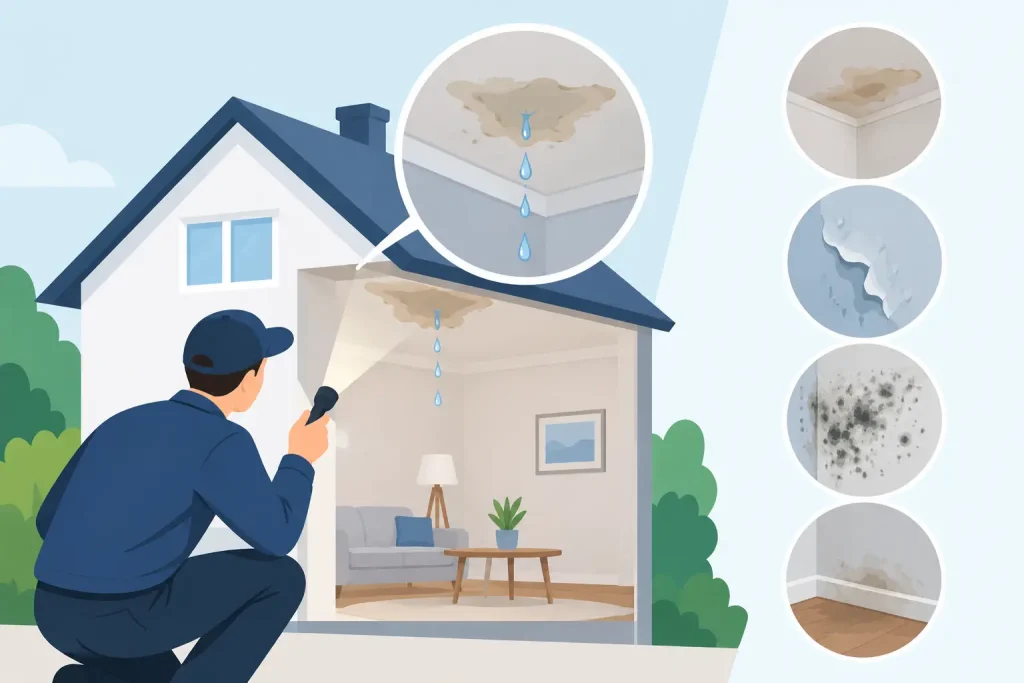
A small brown mark on a ceiling can look like a decorating problem. It may be, but it can also be one of the earliest warning signs of water ingress. Left alone, moisture can damage plaster, stain finishes, weaken external surfaces and create a much larger repair job than the original fault.
Water ingress simply means water getting into the building where it should not. The route is not always obvious. Rain can enter through failed render, cracked masonry, damaged roof coverings, overflowing gutters, poorly sealed windows or gaps around pipes and vents. The stain or bubbling paint you see indoors may be some distance from where the water first entered.
The sensible approach is to deal with the cause first, then repair the affected plaster or render properly. Covering stains or applying a fresh coat of paint without finding the source usually means the problem returns.
The early warning signs of water ingress
Damp patches that change after rain
A damp patch that becomes darker, larger or colder after heavy rain is a strong indication that rainwater is getting through part of the external envelope. Check whether it is close to a chimney breast, window reveal, external corner, roofline or wall facing the prevailing weather.
Damp caused by plumbing leaks can look similar, but it often remains consistent regardless of the weather. If a mark appears only after rain, look outside as well as inside. Overflowing gutters, slipped tiles, damaged pointing and cracks in render are common places to start.
Peeling paint, bubbling finishes and stained plaster
Moisture behind a painted surface causes paint to lose adhesion. You may see bubbles, flaking, discolouration or a powdery finish. Plaster can soften, swell or crumble at the edges of a damp area, particularly around ceilings, window openings and external walls.
A fresh stain is often yellow-brown. Older damage may leave a grey, black or tide-mark effect. Do not assume it is only cosmetic. Drying the surface may improve its appearance temporarily, but the plaster needs assessment once the water source has been stopped.
Cracked, hollow or loose external render
Render is there to provide a protective, weather-resistant finish as well as a tidy appearance. Hairline cracking does not always mean water is entering, especially on an older property where minor movement has occurred. However, open cracks, missing sections, drummy hollow areas and render pulling away from the wall need attention.
Water can work its way behind failed render, particularly around window corners, plinths, pipes and junctions between different materials. Frost then makes matters worse. Trapped water expands as it freezes, widening cracks and loosening more of the finish.
Moss, algae and persistent wetness on walls
Green staining, moss and algae do not automatically mean a wall is defective. Shaded elevations and areas beneath trees naturally stay wetter for longer. But heavy growth around cracked render, gutter outlets, window sills or the base of walls can point to an ongoing moisture issue.
Look for water running down the face of the property rather than being directed into gutters and drains. A blocked downpipe or leaking joint can soak one area of wall repeatedly, eventually causing staining indoors or damage to the external finish.
A musty smell or mould returning in the same place
Mould can be linked to condensation, particularly in kitchens, bathrooms and poorly ventilated bedrooms. That is why it is worth being precise before spending money on repairs. Condensation-related mould tends to form on cold internal surfaces and in corners, whereas water ingress may create a localised damp patch that follows the line of an external defect.
If mould repeatedly returns on one external wall, around a window, or beneath a roof junction despite sensible heating and ventilation, arrange for the area to be checked. The issue may be moisture coming through the fabric of the building rather than moisture generated inside the home.
Where water commonly gets into a property
The condition of the roof should be considered first when a ceiling is affected. Broken or slipped tiles, damaged flashing, blocked valleys and failing guttering can all allow rainwater to travel into roof spaces and down walls. By the time a stain appears on a ceiling, the leak may have been present for some time.
Around windows and doors, failed sealant, cracked render and poorly formed junctions can create a path for wind-driven rain. These faults are easy to overlook because they can be small, yet exposed elevations take the full force of poor weather.
At ground level, external walls can also suffer where soil, paving or decking has been raised too high. This can bridge protective details and hold moisture against the wall. Water should drain away from the property, not sit against the base of it. Leaking external taps, waste pipes and downpipes are also worth checking before assuming the wall itself is at fault.
What to do when you spot a problem
Start by making a note of when the issue appears and whether rain affects it. Take photographs before cleaning, painting or moving furniture. This provides a useful record and can help identify whether the problem is spreading.
Next, inspect accessible areas safely from ground level. Look at gutters during rain if possible, check for obvious cracks in render, and note any damaged seals or loose fittings. Do not climb onto a roof or pull away unstable render yourself. Loose material and hidden decay can make that risky.
If there is an active leak, protect belongings, place a container beneath drips and isolate electricity in the affected area if there is any concern about water near fittings. For severe leaks, sagging ceilings or water near electrical points, seek urgent professional help.
Once the source has been repaired, allow the affected structure adequate time to dry. This is where rushing the job causes problems. Replastering or redecorating over damp backgrounds can lead to further staining, blown finishes and poor adhesion. Drying time depends on the extent of saturation, airflow, heating and the construction of the property.
Why repairs should address the full system
A neat patch repair may be suitable where damage is small and the surrounding finish is sound. If render has failed across a wider elevation, though, simply filling visible cracks may not provide a lasting answer. The condition of the surface, the underlying wall and the vulnerable details around openings all need to be considered together.
The same applies indoors. Damaged plaster should be removed back to stable material, the background allowed to dry, and the repair blended properly into the existing surface. This gives a cleaner finish and reduces the chance of loose or stained areas showing through again.
For exterior walls in need of refurbishment, a professionally applied finish can improve weather protection as well as appearance. The right system depends on the property, the condition of the existing substrate and how exposed the elevation is. A site assessment is more reliable than choosing a finish purely because it looks good in a photograph.
When to call in a plastering and rendering specialist
Call for professional advice when external render is cracked, loose, hollow, visibly damp, or when interior plaster is failing as a result of an identified water issue. It is also sensible to get an assessment before redecorating a recurring stain, especially if the property has had previous patch repairs.
A good inspection separates the symptom from the cause. In some cases, the answer is straightforward maintenance such as repairing a gutter or resealing a junction. In others, failed render needs removing and replacing so the wall can be properly protected again.
For homeowners and landlords in Braintree, Chelmsford, Colchester and the surrounding Essex area, Lee Crane Plastering can assess damaged plaster and external render once the moisture source has been identified. The aim is not to hide the problem, but to leave the surface sound, weather-ready and finished properly.
If a mark, crack or damp smell has started to become familiar, treat it as a prompt to investigate rather than something to paint over. Early action usually protects both the property and the cost of putting it right.