
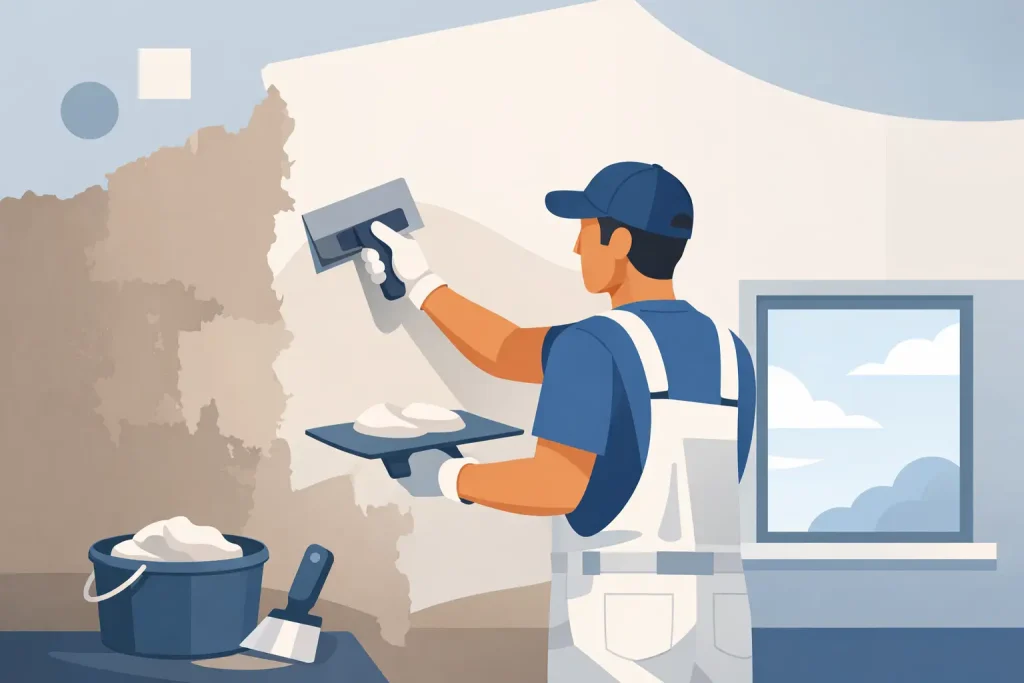
If your walls look tired, uneven or covered in old repairs, you have probably come across the question: what is re skimming walls? In simple terms, it means applying a fresh, thin coat of finishing plaster over an existing wall or ceiling to create a smooth, clean surface ready for decorating.
It is a common job in UK homes, especially where walls have seen years of wear, outdated finishes, patch repairs or poor workmanship. A proper re-skim can make a room feel completely different. Paint goes on better, light reflects more evenly, and the whole space looks sharper.
What is re skimming walls and why is it done?
Re skimming is not the same as building a wall up from scratch. The base surface is already there. The aim is to improve it by covering minor imperfections and producing a flat, smooth finish.
In most cases, a plasterer applies a bonding preparation if needed, then puts on one or two tight coats of finishing plaster. This is worked carefully as it firms up, leaving the surface ready for sanding very lightly if required and then decorating once fully dry.
People usually choose re skimming when the existing surface is sound but no longer good enough to paint straight onto. That might be because the walls are rough, cracked in places, patched badly, or covered in old artex. It is also common during refurbishments, after electrical work, or when old wallpaper has been stripped and revealed a poor surface underneath.
When re skimming makes sense
Not every wall needs a full strip-out and fresh plasterboard. Often, re skimming is the sensible middle ground. It saves the upheaval of more extensive work while still giving you a high-quality finish.
A re-skim is often the right option when plaster is generally stable but the surface has cosmetic problems. Hairline cracking, shallow dents, old filled chases, flaky previous repairs and uneven texture can all be improved this way. It is also a good solution where different patches have been repaired over time and the wall now looks inconsistent.
That said, there are limits. If the original plaster is blown, badly damp, crumbling away from the masonry, or affected by movement, re skimming alone will not solve the underlying issue. In those cases, the damaged areas may need hacking off and repairing properly first. A decent plasterer will tell you that upfront rather than skimming over a problem and hoping for the best.
What surfaces can be re skimmed?
A lot of internal surfaces can be re skimmed, but preparation matters. Old plaster walls, plasterboard, ceilings, patch-repaired areas and previously decorated surfaces can all potentially take a re-skim.
The key question is whether the surface is stable, clean and suitable for plaster to bond to. Painted walls, for example, often need sealing or preparing correctly. Artex ceilings can sometimes be skimmed over, but the pattern depth and condition of the surface will affect the approach. If there is any doubt about adhesion, extra prep is better than taking shortcuts.
This is one reason site assessment matters. A wall that looks fine from across the room may tell a different story up close.
What happens during a re-skimming job?
A good re-skimming job is as much about preparation as the plaster itself. The room should be protected properly, loose material removed, and the background checked for cracks, hollow spots or contamination.
Once the surface is prepared, the plasterer applies the skim coats and works them through the different stages of setting. Timing is a big part of the trade. Too early and the plaster drags. Too late and it will not finish properly. Getting that smooth result comes from experience, not guesswork.
After application, the plaster needs time to dry naturally. Depending on conditions, that can take several days. It normally changes from a darker brownish-pink to a pale pink colour as it dries. Decorating should wait until it is fully dry, and fresh plaster should be mist coated before normal painting.
The benefits of re skimming walls
The most obvious benefit is the finish. A freshly skimmed wall gives you a clean, even base that looks right once painted. It can transform rooms that currently feel scruffy or dated.
There is also a practical side. Better wall surfaces make decorating easier and help avoid the patchy look that often shows through paint. If you are renovating to sell, letting out a property, or updating a room after damage, re skimming can make the final standard look far more professional.
It can also be more cost-effective than more extensive replacement work, depending on the condition of the walls. If the substrate is sound, a skim is often enough to get the result you need without unnecessary disruption.
What re skimming will not fix
This is where honesty matters. Re skimming is a finishing process, not a cure for structural problems.
If a wall has active damp, significant movement cracks, loose plaster, or major unevenness caused by the background failing, those issues need addressing first. The same goes for ceilings with poor fixings or boards that are sagging. Skimming over that sort of problem may look acceptable for a short while, but it will not last.
A proper assessment should always come before price and before promises. Sometimes the right answer is a few local repairs and a skim. Sometimes it is overboarding. Sometimes damaged plaster has to come off. It depends on the condition of the surface and what sort of finish you expect at the end.
Is re skimming messy?
Plastering is never a completely dust-free job, but it should be controlled and managed properly. Most of the mess comes from preparation rather than the skim itself, especially if old loose material has to be removed.
With sensible protection, careful mixing, and a tidy approach, disruption can be kept to a minimum. That is something many customers worry about, especially in lived-in homes, and rightly so. Cleanliness on site says a lot about how a tradesperson works overall.
Can you re skim walls yourself?
Some homeowners are tempted to try it, especially after watching a few videos. The problem is that skimming looks easier than it is. Getting plaster onto a wall is one thing. Getting it flat, smooth and ready to decorate is another.
Timing, trowel control and preparation all matter. If the finish is poor, every defect shows once painted, particularly in natural light. In many cases, a failed DIY skim ends up costing more because it has to be corrected before the room can move forward.
For a cupboard or out-of-sight area, you might decide to have a go. For main living spaces, bedrooms, halls and ceilings, most people prefer a professional finish that does the job properly first time.
How long does re skimming take?
That depends on the size of the room, the number of surfaces involved, and how much prep is needed before plaster is applied. A straightforward wall may be completed in a day, while a full room with ceilings and repairs could take longer.
Drying time is separate from working time. Even after the plastering is complete, you still need to allow the surface to dry before decorating. Warm, well-ventilated conditions help, but blasting fresh plaster with too much heat is not ideal. Steady drying is better.
What affects the cost?
Size is the obvious factor, but it is not the only one. Condition of the existing surface, access, ceiling height, extent of repair work, and the amount of preparation all affect the price.
A room with reasonably sound walls is a different job from one with blown patches, heavy texture, awkward access or lots of making good after rewiring. That is why a proper quote should be based on seeing the work, not guessing from a rough description.
For homeowners and landlords, the cheapest figure is not always the best value. If the finish is poor, decorating becomes harder and the room still does not look right. A fair quote for skilled plastering usually pays off in the final result.
Choosing the right plasterer for re skimming
When you are comparing plasterers, look beyond the headline price. Ask whether preparation is included, how the room will be protected, how long the work should take, and what finish you can expect.
A reliable tradesperson should be clear, realistic and straightforward. If a wall is not suitable for skimming, they should say so. That sort of honesty matters more than a quick promise. At Lee Crane Plastering, that practical approach is exactly what customers tend to value – clear advice, tidy work and a finish that is ready for the next stage.
If you have walls or ceilings that look worn out, patchy or rough after years of use, re skimming is often the job that gets everything back on track. Done properly, it gives you the sort of surface that makes the rest of the room come together.