
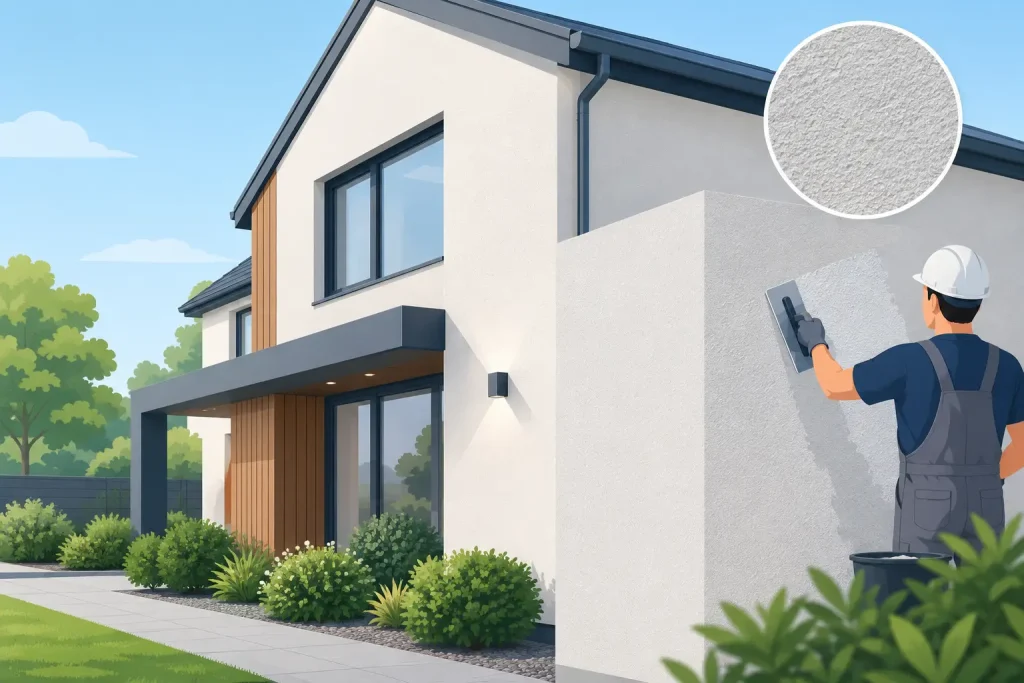
A rendered wall can look tired long before it has properly failed. Hairline cracks, staining beneath window sills, blown patches and a faded finish all make a property look neglected, while allowing rain and frost to put more pressure on the surface. Professional Braintree exterior rendering deals with both sides of the job: improving the appearance of the building and creating a properly finished protective outer layer.
For homeowners, landlords and renovators, the main question is rarely whether the wall needs attention. It is whether the work will be done properly, with sensible preparation and a finish that still looks right once the scaffold has gone. That comes down to the condition of the background, the chosen system and the standard of application.
What exterior rendering should achieve
Exterior render is not simply a cosmetic coating. When it is correctly specified and applied, it gives masonry a consistent appearance, helps shed weather and protects areas where old brickwork or previous finishes have deteriorated. It can transform an extension, a whole house or a smaller problem elevation that has become an eyesore.
The best finish is not always the thickest or the most expensive one. It needs to suit the building, the existing wall and the level of exposure it receives. A sheltered wall may have very different requirements from one that faces prevailing wind and rain. Older surfaces may need more remedial preparation than newer blockwork, and poorly repaired areas need addressing before any new finish is applied.
A good rendering job should leave sharp, neat details around windows, doors, corners and pipework. It should have an even texture and colour, with no obvious lines, hollows or rushed patching. Just as importantly, it should be applied to a sound background. A smart-looking coat over loose or damp-damaged material is only delaying the problem.
Braintree exterior rendering starts with the wall
Preparation is where dependable work separates itself from a quick cover-up. Before rendering begins, the existing surface should be inspected for cracks, hollow areas, loose paint, failed render, contamination and signs that water is getting into the wall. The cause matters. A crack around an opening may be a minor surface issue, but repeated cracking can point to movement that needs consideration before a new finish is applied.
Failed sections are removed back to a firm edge rather than skimmed over. Damaged masonry, gaps and uneven areas are repaired as needed so the new system has a stable base. Protective beads, trims and reinforcement are fitted where appropriate to keep corners straight and help manage vulnerable areas.
This stage can feel less dramatic than choosing a new colour, but it has the greatest effect on durability. If a contractor promises a low price without properly assessing the wall, it is fair to ask what preparation has been allowed for. Clear quotation and an honest conversation about what is found on site help prevent unwelcome changes later in the job.
Moisture needs a proper answer
Render should not be used to hide an active water problem. Leaking gutters, defective flashings, overflowing downpipes and poorly sealed penetrations can all create stains and breakdown on an external wall. These issues should be resolved first, otherwise even a well-applied finish may become marked or damaged.
Breathability, flexibility and water resistance are often discussed together, but they are not interchangeable. The right balance depends on the wall construction and the chosen rendering system. This is why material selection should follow a site assessment rather than a one-size-fits-all recommendation.
Choosing a finish that suits your property
Traditional rendered finishes remain suitable for many properties when applied over a sound, prepared background. Modern systems can offer a coloured finish, improved flexibility or lower maintenance, depending on the product and build-up. The priority is always compatibility with the wall and a finish that meets the practical needs of the property.
Cork spray is another option worth discussing where its benefits fit the project. It provides a textured, coloured finish and can be a useful choice for clients looking to refresh tired external surfaces with a modern system. As with any exterior coating, the background must still be properly prepared, and the product should be selected for the building rather than chosen on appearance alone.
Colour makes a bigger difference than many people expect. Pale shades can make elevations feel cleaner and larger, while darker finishes can give a more contemporary look but may show dust, water marks or uneven surrounding surfaces more readily. It is also sensible to think about neighbouring properties, window frames, roof tiles and brick details before committing to a shade.
For landlord and commercial clients, a practical finish that is easy to keep presentable may be more valuable than a fashionable choice that requires frequent attention. For a homeowner improving a long-term family property, the priority may be appearance, weather protection and reducing the need for repeated repairs. There is no single best answer – there is a suitable system for the building and the result you want.
The detail work customers notice
A rendered elevation can be technically sound and still look poor if the finishing details are careless. Straight lines, clean edges and sensible protection of adjoining surfaces matter. Windows, doors, paths, patios and landscaping should be covered before work starts, while access and scaffold requirements need planning so the job can be carried out safely.
External render also needs time to cure in suitable conditions. Very wet, freezing or excessively hot weather can affect application and drying. An experienced renderer plans around the forecast where possible rather than rushing material onto a wall because a diary date says it must be finished that day.
Clean working practices are part of professional delivery, not an extra. At the end of the project, customers should be left with a clean site, a clear view of the finished work and advice on any sensible aftercare. Fresh render should not be knocked, drilled or painted without checking the correct curing period and product guidance first.
Repairs versus a full re-render
Local repairs can be the right solution where damage is genuinely confined to a small area and the surrounding render is sound. They are often useful for impact damage, isolated cracking after the underlying cause has been dealt with, or small patches around altered pipework.
However, a patch repair can remain visible, especially on older painted or weathered finishes. If several areas are hollow, cracked or stained, repairing each one individually may become poor value and leave an inconsistent appearance. A full re-render gives a more uniform result and allows the condition of the entire elevation to be addressed, but it naturally involves more preparation, material and time.
A site visit is the sensible way to decide. The aim should be to recommend work that solves the issue, not to sell more than the wall requires.
Getting a clear quote for exterior rendering
A useful quotation should explain the scope of the work in plain terms. That includes which elevations are being treated, what removal or repair work is included, the proposed rendering system, the finish, access requirements and any areas excluded from the price. It should also set out whether gutters, downpipes or other fittings need temporary removal or adjustment.
Price matters, but it should not be the only measure. A lower figure can look attractive until missing preparation, access or finishing details appear as extras. Compare like for like, ask how the existing render will be assessed, and make sure the finish being offered is clearly described.
For properties in Braintree and the surrounding Essex area, Lee Crane Plastering incorporates practical site assessment with skilled application, keeping customers informed from the first look at the wall through to the final finish. The work should feel organised and straightforward, because home improvement is disruptive enough without uncertainty over who is doing what and when.
A well-rendered exterior should make you want to look at the property again. Start with an honest assessment of the wall, choose a system that suits it, and give the preparation the attention it deserves. That is how a clean finish becomes a lasting improvement rather than a short-term facelift.