
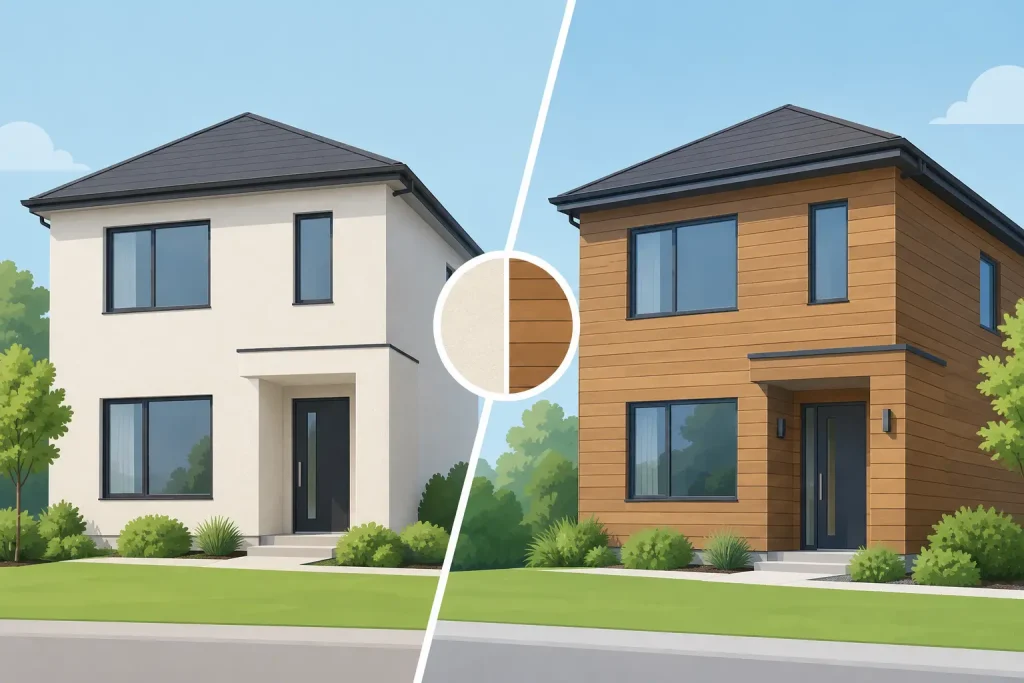
A tired exterior does more than spoil the look of a property. Cracked render, stained brickwork or worn timber can let weather take hold and make a home feel neglected. When weighing up external render versus cladding, the best choice is rarely just about appearance. The condition of the walls, the style of the building, the budget and the level of maintenance you are prepared to take on all matter.
Both options can transform a house. Both can be used as part of an insulation upgrade. But they work differently, have different detailing requirements and suit different properties. A proper site assessment should come before choosing a finish.
External render versus cladding: the main difference
External render is a continuous coating applied directly to a prepared wall or to an approved external insulation system. It gives a clean, solid-looking finish with no visible joints across the main wall areas. Modern systems are available in a wide range of colours and textures, from a smooth contemporary finish to a more traditional look.
Cladding is a separate outer layer fixed to a supporting framework. Depending on the material, it may be timber, composite boards, fibre cement, metal or other purpose-made panels. It is usually installed with a cavity behind it to allow the wall construction to manage moisture correctly.
The visual difference is immediate. Render tends to make a property look more unified and can soften mismatched extensions or unattractive masonry. Cladding introduces lines, panels and texture. It can look striking on a modern extension or as a feature around an entrance, but it is not always the right answer for an entire house.
When external render is the stronger option
Render is often the practical choice where the existing masonry is sound but unattractive, patchy or covered in failing old coatings. It can give a dated house a much cleaner appearance without changing its proportions or adding a heavily panelled finish.
It is also well suited to homeowners who want a consistent colour across the exterior. A quality coloured render system avoids the need for routine repainting associated with older painted finishes, although it will still need occasional cleaning and inspection. The right system should be selected for the wall beneath it, not simply because a particular colour chart looks good.
Preparation is where the quality of the job is decided. Loose material must be removed, cracks need proper attention and the background has to be sound, clean and suitable for the chosen system. Beads, reinforcement mesh and movement details need to be installed correctly. Skipping these stages may save money at the start, but it often leads to cracking, staining or failure later.
For properties exposed to driving rain, flexibility and water management are particularly important. A specialist finish such as a cork spray coating may be worth considering where a more flexible, textured exterior is preferred. It can provide an attractive alternative to conventional render finishes, but it still relies on thorough preparation and a suitable substrate.
When cladding makes more sense
Cladding can be a good fit when the design calls for contrast and texture. It is commonly used on new extensions, dormers, gable ends and small commercial frontages where a clear architectural feature is wanted. A well-chosen cladding material can break up a large wall and give a property a more contemporary character.
It may also suit walls where creating a ventilated cavity is beneficial. The framework, cavity barriers, flashings, fixings and trims all need careful design and installation. The boards themselves are only one part of the system. Poorly detailed edges around windows, doors, roofs and service penetrations are where water problems can start.
Cladding is not automatically maintenance-free. Timber needs the most attention, particularly if you want it to keep its original colour rather than weather naturally. Composite and fibre cement products can be lower maintenance, but they still need cleaning, checks around joints and prompt attention if a board is damaged. Replacement can be straightforward in a localised area, provided the original product remains available.
Cost is more than the initial quotation
It is tempting to compare the price per square metre, but that does not give the full picture. Access equipment, repairs to the existing wall, insulation, window reveals, downpipes, trims and finishing details can all affect the final cost of either option.
Render can be cost-effective over larger, straightforward wall areas because it creates one continuous finish. However, extensive preparation, awkward access or a wall that needs substantial repair will increase the price. Cladding materials vary widely in cost, and the supporting structure and detailed trims can make a cladding project more expensive than it first appears.
The sensible question is not which is cheapest in general. It is which system gives the right result for your property and is likely to stay looking good with realistic maintenance. A cheap finish applied to a poor background is never good value.
Insulation and moisture need proper planning
Both render and cladding can sit over external wall insulation, which can improve comfort and help reduce heat loss. This is not simply a matter of fixing insulation boards to a wall and covering them. The whole build-up must be designed to suit the property, with correct insulation thickness, fixings, junctions, ventilation and weather protection.
External insulation changes the depth of the wall. That affects window and door reveals, sills, rainwater goods, vents and roof edges. These details need planning before work begins, not improvised once the scaffold is up.
Moisture should also be investigated rather than covered over. If there is a leaking gutter, damaged roof detail, cracked masonry or rising ground level, deal with the cause first. Render and cladding are finishes, not cures for an underlying water issue. A careful survey helps identify whether the wall is dry and stable enough for the proposed work.
Appearance, upkeep and repairability
For a traditional or simple house, a well-finished render can look right at home. It gives broad, uncluttered elevations and can make old alterations blend in better. Colour choice matters. Very pale finishes can show dirt around splash zones, while very dark colours may make defects and fading more noticeable depending on the system and exposure.
Cladding offers more variation in texture and direction. Vertical boards can make a low elevation feel taller, while horizontal boards can widen the appearance of a small extension. Used sparingly, it can work very well alongside render. Used everywhere without considering the building’s style, it can date quickly.
In terms of repairs, cladding may have an advantage when damage is limited to one or two boards. Render repairs can be less easy to disguise, especially where colour has weathered over time. On the other hand, render has fewer visible joints where debris and algae can gather. Neither option is completely maintenance-free, and both benefit from an annual visual check.
Planning, safety and choosing the right installer
Planning requirements can vary, especially in conservation areas, on listed buildings or where the change materially alters the appearance of the property. It is worth checking early rather than assuming a replacement finish will be treated the same as the existing one.
Fire performance and building regulations also need consideration, particularly for flats, mixed-use buildings and taller properties. The material, insulation, cavity arrangement and overall wall construction should be appropriate for the building. Do not accept vague assurances. Ask what system is being installed and how key details will be finished.
A reliable contractor should be happy to inspect the walls, explain the preparation needed and provide a clear quotation. At Lee Crane Plastering incorporating Eco Corkspray Solutions, the focus is on selecting a finish that suits the wall and completing the detail work properly, not forcing every property into the same approach.
The right exterior finish should make your property look cared for and remain practical long after the scaffold has gone. Start with the condition of the walls, be honest about maintenance, and choose the system that fits the building rather than the latest trend.