
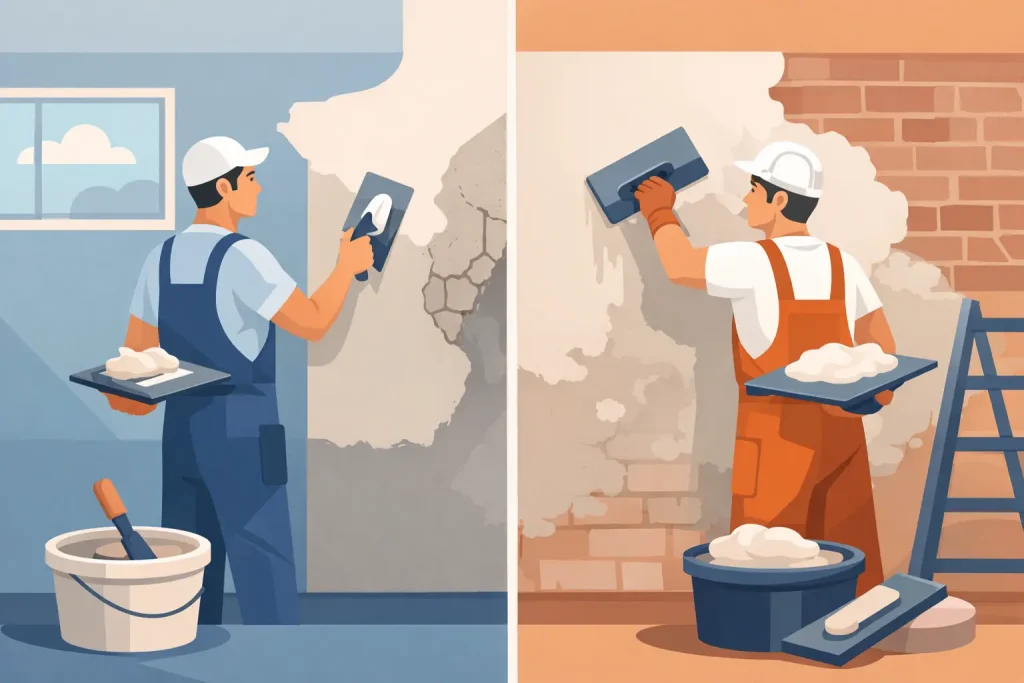
A wall can look tired for very different reasons. It may have light surface cracking, old textured finishes and small dents, or it may be hiding loose plaster, damp damage and years of poor repairs. That is why the choice between plaster skim vs full replaster should be based on the condition of the background, not just how rough the room looks on viewing day.
A skim can transform a sound but dated surface quickly. A full replaster is the better answer when the existing plaster has failed and cannot provide a secure base for a new finish. Getting that decision right avoids paying for a neat-looking job that cracks, blows or comes away shortly afterwards.
What is a plaster skim?
Skimming is the application of a thin finishing coat over an existing wall or ceiling. Usually, the surface is prepared first, any weak areas are dealt with, and the plasterer applies coats of finish plaster to leave the area flat, smooth and ready for decorating once dry.
It is commonly chosen for walls with sound existing plaster, covered-over artex, minor surface imperfections, old repairs or a rough painted finish. It can also be a practical way to update a room without the disruption of removing every square metre of existing plaster.
The key word is sound. A skim coat is a finish, not a cure for movement, moisture or failing plaster underneath. If the wall is solid, well bonded and reasonably true, skimming is often the cleanest and most cost-effective route to a high-quality result.
When a skim coat makes sense
A plaster skim is normally suitable when tapping the wall does not reveal hollow areas, there are no signs of active damp, and the existing surface is firmly attached. Hairline cracks and isolated small defects are not automatically a reason to strip a room back. They can often be prepared and repaired properly before the final finish is applied.
It is also a sensible option where the main issue is appearance. For example, a homeowner may be removing dated wallpaper, refreshing a rental property between tenancies, or preparing walls for a better paint finish. Provided the background is stable, a fresh skim creates a far sharper result than repeatedly filling, sanding and painting over uneven surfaces.
Ceilings are a common example. If an old textured coating is secure and has been assessed as suitable for over-skimming, a skim may provide a smooth modern ceiling with less mess than removal. Where an older textured coating is suspected of containing asbestos, it should not be sanded, scraped or disturbed without appropriate testing and advice.
What does full replastering involve?
Full replastering means removing failed, loose or unsuitable existing plaster and rebuilding the wall surface. Depending on what is found, this may involve taking the wall back to masonry or another sound background, carrying out repairs, applying suitable backing coats or boards where required, and then finishing with a smooth plaster coat.
The exact process varies from property to property. A Victorian wall, a newer blockwork extension and a previously boarded partition do not necessarily need the same preparation. This is why a proper inspection matters before a price is agreed.
Full replastering is more disruptive than skimming. There is more removal work, more waste to manage and often more drying time. However, it provides the opportunity to deal with the real condition of the wall rather than covering it. When the substrate has failed, that extra work is usually the difference between a finish that lasts and one that soon needs attention again.
Plaster skim vs full replaster: the main differences
The most obvious difference is how much of the existing wall is retained. A skim works over a prepared existing surface. Full replastering removes defective material and starts again from a reliable base.
Cost follows the same pattern. Skimming is generally less expensive because it requires less labour, less material and less waste removal. But it is only good value when the existing plaster is fit to remain. Applying a skim over hollow, damp-affected or unstable plaster can lead to further costs when the work has to be removed and redone.
There is also a difference in what each option can correct. A skim can improve shallow imperfections and create a uniform finish, but it cannot properly straighten severely uneven walls or make defective plaster secure. Full replastering allows the wall to be brought back into better shape, although very old properties may still have natural variations that should be discussed before work starts.
Signs that full replastering may be needed
Some problems are clear from the outset. Plaster that sounds hollow when tapped, crumbles at the edges, flakes away, or moves when pressed is unlikely to be a dependable base for skimming. Large cracks that continue through the wall, staining linked to an unresolved leak, and sections that have already blown are also warning signs.
Damp must be dealt with at its source before new plaster is applied. That could be a leaking pipe, damaged guttering, defective external render, poor ventilation or another issue. Replastering over moisture damage without resolving the cause only hides the problem for a while.
Previous workmanship can also affect the decision. Walls sometimes contain several layers of patching, loose paint, poor bonding or mismatched materials. In those cases, stripping back weak areas and rebuilding them correctly can be more reliable than trying to make an uncertain surface look presentable.
Do not judge the wall by appearance alone
A freshly painted wall can conceal a surprising amount. Conversely, a wall with faded paint and a few surface marks may be structurally sound and perfectly suitable for skimming. A professional assessment should include checking for loose areas, moisture damage, cracking patterns, the condition of corners and reveals, and how level the surfaces are likely to be once finished.
It is worth being clear about the finish you expect, too. If you are fitting a new kitchen, installing built-in furniture or using strong lighting that shows every shadow, the quality and straightness of the finished walls becomes more noticeable. A good plasterer will explain what can realistically be achieved within the existing building and recommend preparation to suit.
How preparation affects the final result
Whether the work is a skim or a full replaster, preparation is where much of the quality lies. Loose material needs removing, cracks need proper attention, backgrounds may need sealing or bonding, and protection should be put in place for floors, doors and nearby fittings.
Clean working also matters. Plastering creates unavoidable dust and waste, particularly where old material is being removed, but a well-organised job keeps disruption under control. Rooms should be protected, waste cleared as work progresses, and the scope agreed so there are no surprises around areas such as window reveals, radiator removal or damaged timber trims.
The finish should be left even and ready for the next stage, but it must be allowed to dry naturally before decorating. Rushing this stage with heavy paint application can affect the result. New plaster often changes from darker to lighter as it dries, and drying times vary with thickness, ventilation and weather conditions.
Choosing the right option for your property
For a sound wall that simply looks dated or uneven at the surface, skimming is often the sensible choice. It gives a clean, smooth finish with less disruption and can make a significant difference to a room.
For walls with widespread loose plaster, deep damage, ongoing staining or major unevenness, full replastering is normally the more dependable investment. It costs more because it involves more work, but it gives the new finish the foundation it needs.
At Lee Crane Plastering, the aim is not to recommend the biggest job by default. It is to assess what is on the wall, explain the options plainly and carry out the work needed for a finish that looks right and stays right. If you are unsure which route your walls need, an on-site assessment before decorating or refurbishment is the best place to start.