
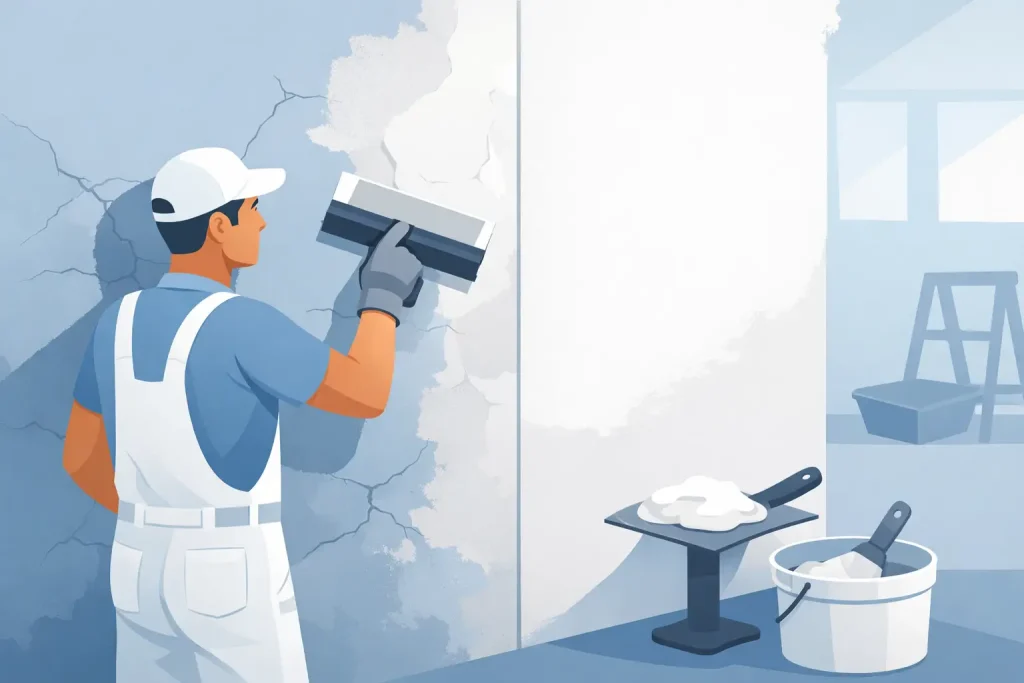
If you have ever looked at a wall and thought, “That paint shows every mark,” or “The old finish just looks tired,” you are already close to the answer to what is skimming a wall. Skimming is the process of applying a thin coat of finishing plaster over a wall to create a smooth, even surface ready for decorating. It is one of the most common ways to improve walls that are sound underneath but rough, patched, uneven or dated on the surface.
A lot of people assume skimming is just a quick cosmetic fix. Sometimes it is cosmetic, but done properly it is also about getting the surface right so paint, wallpaper or final decoration sits well and looks clean. The quality of the finish matters, and so does knowing when skimming is the right job and when it is not.
What is skimming a wall?
Skimming a wall means laying on a very thin top coat of plaster, usually in two passes, to leave the surface flat and smooth. It is not the same as building out a badly damaged wall from scratch, and it is not a heavy repair method. Think of it as refining the face of the wall rather than rebuilding the wall itself.
A skim coat is typically applied over existing plaster, plasterboard, or surfaces that have had repairs and need blending in. The aim is to remove the look of minor imperfections, shallow surface damage, visible patching, or old texture, and replace it with a fresh finish that is ready to dry out and then paint.
When done well, skimming gives walls a sharp, clean appearance. Corners look neater, light reflects more evenly, and the room simply feels better finished.
When skimming is usually needed
Skimming is a good option when the wall is basically stable but the top surface is poor. That might mean old plaster with hairline cracks, previous patch repairs, flaky areas that have been made good, or walls that have been stripped of wallpaper and left uneven.
It is also often used where artex or another textured finish needs covering, as long as the background is suitable. In refurbishments, skimming can be the step that brings mismatched surfaces back into line, especially after electrical work, new openings, or general repair jobs.
If you are decorating a room and want a better final result, skimming can make a big difference. Fresh paint will only look as good as the surface underneath. If the wall has ridges, dents or visible trowel marks from old work, paint tends to highlight them rather than hide them.
When skimming is not the right answer
This is where experience matters. Not every wall should be skimmed.
If the plaster is blown, loose, heavily cracked, damp affected or moving, a skim coat will not solve the underlying issue. In those cases, the wall may need areas hacking back, proper repairs, bonding out, or complete re-plastering. Skimming over an unstable background is false economy because the finish is only as sound as what it is stuck to.
The same applies if there is ongoing damp or staining that has not been dealt with. A neat skim over a problem wall may look better for a while, but it will not stop defects coming back through.
So while skimming is a very useful process, it depends on the condition of the surface below. A professional assessment is always worth it before any work starts.
What happens during the skimming process?
The job starts with preparation. That usually means checking the wall, removing loose material, scraping back any problem areas, and making sure the background is suitable. Depending on the surface, it may also need sealing or priming so the plaster bonds properly and does not dry too quickly.
Once the wall is ready, the plaster is applied in thin coats. The plasterer works it across the surface with a trowel, flattening and refining as it firms up. Timing is important. Too wet, and it drags. Too dry, and it becomes difficult to finish neatly.
The final stages are all about closing the surface and polishing the finish to a smooth, even standard. Good skimming is not just about getting plaster on the wall. It is about controlling the set, keeping lines true, and leaving a surface that needs minimal sanding and is ready for decoration once fully dry.
A proper skim should look level and tidy throughout the room, not just from one angle. Natural light and side light will show every defect, so attention to detail counts.
What does a skimmed wall look like?
A newly skimmed wall should be smooth, uniform and free from obvious hollows, ridges and rough patches. While the plaster is drying, it will change colour from dark pinkish brown to a much lighter shade. That is normal.
It is also normal to see slight trowel shading while it dries. What you should not expect is a wall full of deep lines, heavy ripples or rough areas that need extensive sanding afterwards. Skimming is meant to leave a finish ready for mist coating and painting, not a surface that needs correcting by the decorator.
Perfectly flat walls depend partly on what is underneath. If an older property has some movement or long-term unevenness, skimming can improve the finish a lot, but it may not turn every wall into a dead-straight new-build surface. A good plasterer will be honest about that.
Can skimming cover imperfections?
Yes, but only up to a point. Skimming is excellent for minor surface issues such as light cracking, shallow dents, old repairs, and general unevenness. It can also help cover textured finishes where the base is sound.
What it will not do is hide major structural cracking, serious movement, loose plaster or badly out-of-true walls. If the defects are too deep or the wall is failing underneath, thicker repair work may be needed before any skim coat goes on.
This is one of the biggest misunderstandings around plastering. People often hope a skim will fix everything because it sounds simpler and cheaper. Sometimes it does the job perfectly. Sometimes it just covers a bigger issue for a short time.
Is skimming better than replastering?
Neither is automatically better. It depends on the wall.
If the existing plaster is sound and the problem is mainly surface appearance, skimming is often the sensible choice. It is less disruptive than full replastering, usually quicker, and gives an excellent finish when the background is in decent condition.
If the plaster is damaged beyond surface level, then replastering or more substantial repairs may be the better long-term option. That can cost more at the start, but it avoids paying twice.
For homeowners and landlords, the right approach usually comes down to this: are you improving the face of the wall, or are you fixing the wall properly because the base has failed? A reliable plasterer should tell you plainly which one you need.
How long does skim plaster take to dry?
Drying time varies depending on room temperature, ventilation, thickness and the condition of the background. In normal conditions, skim plaster often takes a few days to dry, but it can take longer. Cooler weather and poor airflow will slow it down.
It should be left to dry naturally. Turning the heating up too hard or forcing the drying process is not usually a good idea, as it can cause problems with the finish. Once the plaster has dried to a uniform pale colour, it is generally ready for a mist coat before painting.
If decorating starts too early, moisture can get trapped and affect the final result. Patience here pays off.
Is skimming worth it before decorating?
If the walls are poor enough to spoil the final look, then yes, it often is. Fresh paint on a rough wall tends to make defects more obvious, especially in bright daylight or rooms with strong side lighting. A skimmed wall gives you a much cleaner base and a better standard of finish overall.
That said, not every room needs it. If the surface is already smooth and only needs minor filling and prep, full skimming may be more than is necessary. The honest answer is that it depends on your standards, the condition of the wall and what sort of finish you want at the end.
For renovation work, especially where previous trades have cut into walls or old coverings have been removed, skimming is often the stage that brings everything together.
Choosing the right plasterer for skimming work
Skimming looks simple when you watch someone experienced do it. It is not simple when it is done badly. Poor skimming leaves waves, drag marks, cracking, messy edges and extra decorating costs afterwards.
A good tradesperson will assess the background first, explain whether skimming is suitable, protect the work area properly and leave a finish that stands up in natural light. Cleanliness matters too. Plastering is messy by nature, but the job should still be organised and professional from start to finish.
If you are having work done in Essex or nearby areas, it is worth using a plasterer who knows how to judge older walls as well as modern surfaces. That practical experience often makes the difference between a skim that lasts and one that simply covers trouble for a while.
Skimming is one of those jobs where the result speaks for itself. When it is the right treatment and it is done properly, the room feels cleaner, sharper and ready for the finish you actually want.