
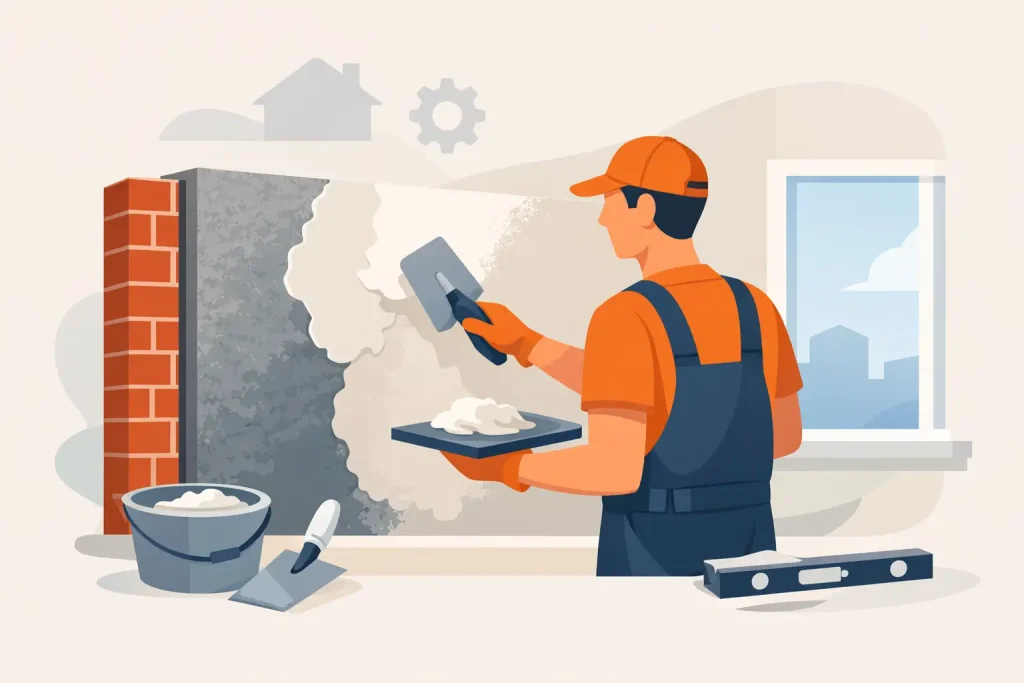
If you have ever looked at a freshly plastered wall next to one with cracks, patches and uneven lines, the answer to what is the purpose of plastering becomes pretty clear. Plastering is not just about making a room look tidy. It creates a smooth, solid surface, helps protect the wall underneath, and gives you the right base for paint, wallpaper or further finishing.
For most property owners, plastering only becomes a priority when something has gone wrong. You notice blown areas, peeling paint, old artex, dents from years of wear, or poor work from a previous job. At that point, plastering stops being a cosmetic extra and becomes part of putting the property right.
What is the purpose of plastering in practical terms?
In simple terms, plastering is there to improve the surface of a wall or ceiling so it looks better, performs better and lasts longer. That sounds straightforward, but each part matters.
A good plastered finish gives a flat, even appearance. That is the part most people notice first. Light falls properly across the surface, corners look sharper, and decoration goes on far more cleanly. If you are spending money on painting, a kitchen refit or a full renovation, there is not much point cutting corners on the surface underneath.
It also provides protection. Walls and ceilings take more abuse than people think, especially in busy family homes, rented properties and older buildings that have seen repeated repairs. A properly applied plaster coat helps cover rough masonry or damaged backgrounds and creates a more durable face to the surface.
Just as importantly, plastering prepares walls and ceilings for whatever comes next. Paint shows every ripple. Wallpaper can lift if the background is poor. Tiling often depends on a sound, stable substrate. If the plastering is substandard, the final finish usually suffers as well.
A smooth finish is only part of the job
People often assume plastering is mainly about appearance. It certainly transforms a room, but the job is more than skimming over a wall to make it look neat.
Plastering helps correct uneven surfaces, cover old repairs and bring consistency to areas that have been altered over time. A wall may have been chased for electrics, patched after plumbing work, or repaired around a window replacement. Without proper plastering, those areas tend to stand out.
This is why patch repairs and full re-skims need to be judged carefully. In some cases, a local repair is enough. In others, trying to patch multiple areas can leave the room looking pieced together. The right approach depends on the condition of the background, the age of the property and the standard of finish you want at the end.
Why plastering matters before decorating
Decoration is only as good as the surface beneath it. That is one of the biggest reasons plastering matters.
Fresh plaster gives decorators a clean, even canvas. Paint coverage is more consistent, edges are easier to cut in, and the final result looks sharper. If the wall is wavy, crumbly or full of previous filler marks, even expensive paint will not hide it. In fact, a lot of modern finishes make defects more obvious, especially in strong natural light.
The same goes for wallpaper. Any raised areas, dips or loose material underneath can show through or cause problems later. Plastering creates the proper starting point, which saves frustration and often saves money too. Redecorating over a poor surface can become a false economy if it needs doing again.
Plastering also helps with repair work
Not every plastering job is part of a full refurbishment. A lot of it comes down to repair.
Leaks, impact damage, movement cracks, blown plaster and failed previous work all leave surfaces looking tired and unreliable. In those situations, plastering restores order. It allows damaged sections to be removed, made sound and refinished so the wall or ceiling can be used and decorated properly again.
That does not mean every crack needs a full room re-skim. Hairline cracking may be minor, while deeper cracking can point to movement or poor adhesion. A decent plasterer will tell you whether the issue is cosmetic, localised or something that needs wider attention first. Honest advice matters here. Covering over a problem without dealing with the cause rarely ends well.
Internal plastering and external rendering serve similar goals
Inside the property, plastering is mainly about creating smooth, strong surfaces on walls and ceilings. Outside, rendering plays a similar role while also taking on the weather.
Both are about finish and protection, but the demands are different. External surfaces need to cope with rain, temperature changes and general exposure. Internal plastering is more focused on appearance, repair and providing a suitable surface for decoration.
For homeowners planning broader renovation works, it helps to think of plastering and rendering as part of the same standard of workmanship. Whether it is a lounge wall or an external elevation, the principle is the same – the surface needs to be sound, neat and fit for purpose.
What plastering can and cannot do
This is where expectations need to be realistic. Plastering can make a poor surface look new again, but it is not a cure for every problem in a building.
If there is ongoing damp, movement, loose background material or badly failed masonry underneath, those issues need sorting before a lasting finish can be achieved. Plaster applied over an unstable surface may look fine at first, but it will not hold up if the substrate is still failing.
That is why proper preparation matters so much. The quality of the finish depends not only on the final skim, but on how the surface is assessed, cleaned, repaired and prepared beforehand. Customers often judge plastering by the last coat they can see, but the unseen groundwork is what makes the result last.
What is the purpose of plastering when renovating older rooms?
In older homes, plastering often becomes essential because surfaces have been repaired repeatedly over the years. You may have layers of old finishes, uneven patches, dated textures or walls that are simply no longer straight enough to decorate well.
In that setting, plastering brings the room back to a usable standard. It helps modernise the appearance without changing the character of the property more than necessary. The aim is not to make every old room look brand new in a way that feels out of place. It is to give you a clean, dependable finish that works with the rest of the house.
There is usually a judgement call involved. Some walls can be patched and blended successfully. Others are better stripped back and refinished properly. That depends on condition, budget and what standard you expect once the room is complete.
Good plastering is noticed most when it is done badly
People rarely walk into a room and talk at length about the plastering when it has been done well. They just notice that the room looks right. The walls appear straight, the ceiling looks clean, and the decoration sits properly.
Bad plastering is different. You see trowel marks, hollow spots, rough patches, poor edges around sockets and obvious lines where repairs have not blended in. It affects every finish that follows and can make an otherwise decent refurbishment look unfinished.
That is why workmanship matters. Plastering is one of those trades where the standard of the final result is visible every day. It is not hidden behind cupboards or under floor coverings. Once the light hits the wall, every shortcut shows.
Why homeowners and landlords should take it seriously
If you are improving your own home, quality plastering helps you get the finish you actually want after the mess and cost of renovation. If you are a landlord or managing a property for rental, it can also make practical sense. A clean, solid finish is easier to decorate, easier to maintain and better for presentation between tenants.
For light commercial spaces, appearance also affects how professional the place feels. Customers, staff and visitors may not comment on the plastering itself, but they notice tired walls and ceilings straight away.
In all cases, the point is the same. Plastering is not an add-on. It is part of the standard of the property.
A well-plastered wall does its job quietly. It gives you a better finish, a sounder surface and fewer problems when it comes to decorating or repairing the space again later. If you are putting time and money into a property, it is one of the jobs worth getting right first time.