
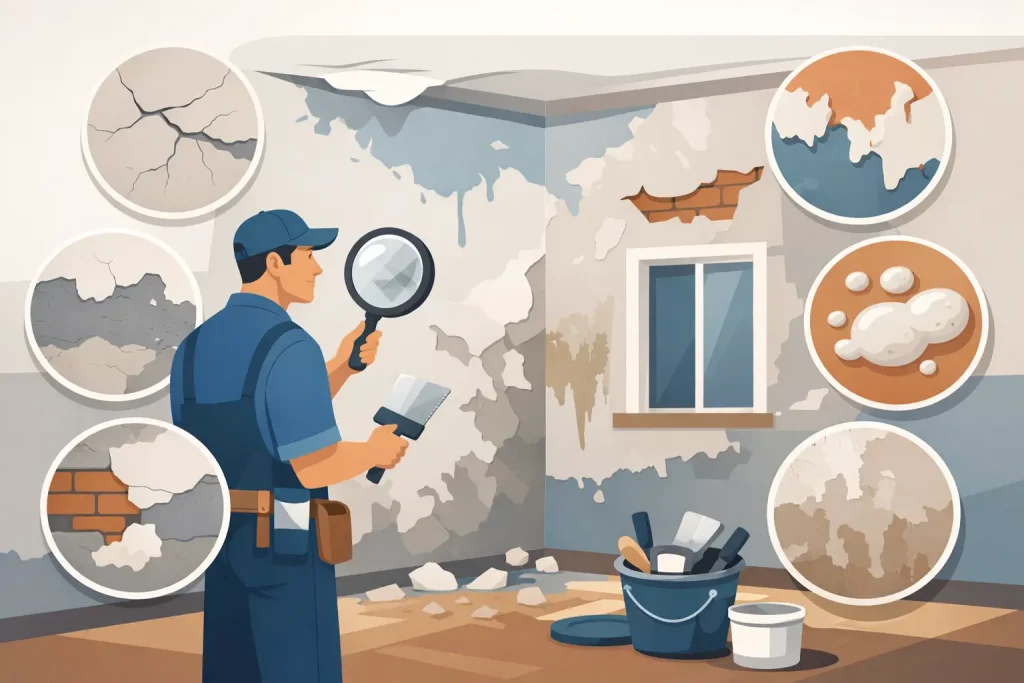
A newly plastered wall should disappear into the room. Once painted, it ought to look flat, clean and consistent in normal daylight. If your eye is drawn to waves, lines, cracks or rough areas, those may be signs of poor plastering rather than harmless quirks of an older property.
Some defects are only cosmetic and can be corrected with careful preparation. Others point to movement, moisture or weak adhesion beneath the surface. Knowing the difference helps homeowners, landlords and renovators decide whether a small repair is sensible or whether the work needs proper investigation before decorating makes the problem harder to see.
10 signs of poor plastering to look for
1. Ripples and uneven walls
The most obvious issue is a wall or ceiling that looks wavy when light falls across it from the side. This is particularly noticeable beside windows, patio doors and ceiling lights. A good finish does not have to make an old building perfectly square, but the plaster should follow the existing line cleanly and feel consistently flat.
Minor undulations can sometimes be dealt with during preparation for painting. Deep hollows, raised ridges or a surface that looks like it has been spread on unevenly are different. They may need to be skimmed again, or in more serious cases removed and re-applied correctly.
2. Trowel marks, drag lines and rough patches
Fine trowel marks can show through after paint, especially with matt paint in strong natural light. Pronounced lines, rough patches and dragged material are signs that the plaster was not properly worked, flattened or finished before it set.
Run your hand lightly over the dry surface. It should feel smooth, without gritty areas or sharp ridges. Do not judge fresh plaster before it has dried fully, as colour variation is normal during drying. Texture and visible marks, however, will not improve by themselves once the wall is dry.
3. Cracks around openings or across the surface
Not every crack means poor workmanship. Fine hairline cracking can occur as new plaster dries, particularly where there is a change in background material. Older properties can also move slightly with seasonal temperature and moisture changes.
The concern is with cracks that are wide, recurring, diagonal from window or door corners, or accompanied by loose plaster. These may indicate movement in the wall, poor preparation, an unsuitable backing or inadequate reinforcement where different materials meet. Filling a recurring crack without addressing its cause generally leads to the same problem returning through the paint.
4. Hollow-sounding or loose plaster
Tap the wall gently using your knuckles. A firm, well-bonded area gives a solid sound. A hollow or noticeably different sound can suggest that plaster has lost its bond with the background.
This should not be ignored, particularly if there are cracks, bulges or areas that move slightly when pressed. Loose plaster can eventually break away, creating both a repair job and a safety concern. The affected material normally needs to be removed back to sound work before any repair is carried out.
5. Bubbling, blistering or flaking paint
Paint that blisters or peels soon after decorating is frustrating, but the paint itself is not always to blame. It can happen when plaster was painted before it had dried fully, when surfaces were dusty, or where moisture is being drawn through the wall.
Fresh plaster needs adequate drying time, which varies with thickness, ventilation and weather conditions. It should be mist coated correctly before full coats are applied. If bubbling appears alongside staining, a musty smell or damp patches, deal with the moisture source first. Repainting over it may look better for a short time, but it will not provide a lasting repair.
6. Damp marks, staining and white deposits
Brown or yellow staining, dark patches and white powdery deposits are never simply a finishing issue. They usually mean water is present or has been present in the wall. Causes can range from a leaking gutter, damaged external render or failed sealant to plumbing leaks, condensation or a defect around a window opening.
Plaster applied onto a damp background is unlikely to perform well for long. Before repairing internal damage, the outside of the property and any nearby pipework should be checked. On exterior walls, cracks and failed render can let water in, so the internal symptom may be some distance from the original fault.
7. A finish that is too thin or poorly blended
Plaster should form an even, durable surface. Where it has been applied too thinly, imperfections in the wall below can show through, edges may be fragile and repairs can become visible as separate patches after painting.
Poorly blended patching is common after electrical work, plumbing repairs or old fittings have been removed. A professional repair should feather into the surrounding area so that it does not stand out when the room is decorated. It is not always possible to match an old textured surface exactly, but the transition should look deliberate and tidy, not like an obvious rectangle on the wall.
8. Crooked corners and untidy reveals
External corners, window reveals and door openings put workmanship on display. They should be straight, crisp and properly protected where appropriate. Crooked corners, uneven widths around windows or rough edges where plaster meets timberwork and frames make even a newly decorated room look unfinished.
Older houses are not always level, so there is a degree of judgement involved. Forcing every line to be perfectly straight can sometimes make an existing feature look worse. The standard to expect is a neat, balanced finish that works with the building rather than drawing attention to avoidable inconsistencies.
9. Visible joins between old and new work
A repaired section should not announce itself after painting. If you can clearly see a line, change in level or different texture where new plaster meets the old, the area may not have been prepared or blended properly.
Lighting matters here. Check the wall in daylight and with the room lights on, particularly if you are about to approve work or make final payment. A defect that is hidden by poor light during the day can become very obvious in the evening.
10. Dusting, crumbling or soft spots
Plaster should not continually shed dust when touched after it has dried and cured. Soft, crumbly areas can result from an incorrect mix, poor bonding, contamination on the wall or moisture damage. They will struggle to hold paint and may deteriorate further when knocked or drilled.
A small localised soft patch may be repairable. Widespread weakness is more serious and often means the finish should be assessed before any further work is carried out. Covering it with lining paper or thick paint only postpones the problem.
When poor plastering may be more than a cosmetic issue
The location and pattern of a defect matter as much as its appearance. A single shallow trowel mark in a spare bedroom is a finishing issue. Cracking around several openings, damp patches on an outside wall or loose material on a ceiling calls for a closer look.
Ceilings deserve particular attention. Staining, sagging, cracking or a hollow area can indicate a leak above or failed adhesion. Keep people clear of any area that appears unstable and arrange for it to be inspected rather than testing it aggressively.
The same applies to external surfaces. Cracked or damaged render can allow water into the wall and lead to internal staining or blown plaster. Repairing the internal finish before sorting the external defect is false economy. The wall needs to be dry and the source of water stopped before a lasting internal repair can be made.
What to do before arranging a repair
Take clear photographs in daylight, including wider shots that show where the defect sits in the room. Make a note of when it first appeared and whether it changes after heavy rain, cold weather or using a nearby bathroom. This gives a plasterer useful information and can help distinguish a surface defect from an ongoing moisture or movement issue.
Avoid sanding, filling or painting over the problem straight away if there is dampness, loose material or active cracking. Those quick fixes can obscure the cause and add unnecessary cost later. A site assessment should look at the condition of the background, not only the visible finish.
For properties in and around Braintree, Essex, a skilled plastering specialist can assess whether the work needs localised repair, re-skimming or investigation of an underlying issue. A clear explanation of the proposed work, drying times and preparation needed before decorating is a good sign that the job is being approached properly.
A professional plastered finish is not about chasing perfection under every angle of light. It is about sound preparation, secure adhesion and a clean surface that stays looking right once the room is lived in. If something does not look or feel right, it is worth dealing with it while the repair is still straightforward.