
If you have just had a room plastered, the first thing you notice is how quickly the surface changes colour. That usually leads to the same question – how long before fresh plaster dries, and when can you paint it without causing problems? The short answer is usually around 4 to 7 days for skimming in decent conditions, but that is only a guide. Temperature, airflow, thickness and the condition of the wall all make a difference.
Fresh plaster needs time to dry naturally. Rushing it with too much heat or decorating too soon can spoil what should be a clean, smooth finish. If you are spending money on plastering, it makes sense to let it cure properly before the next stage.
How long before fresh plaster dries in most homes?
For a standard skim coat on internal walls or ceilings, fresh plaster often dries in 4 to 7 days. In some properties it can be ready a bit sooner, and in others it can take closer to 10 days. If the plaster has been applied more thickly, or if the room is cold and poorly ventilated, it may take longer.
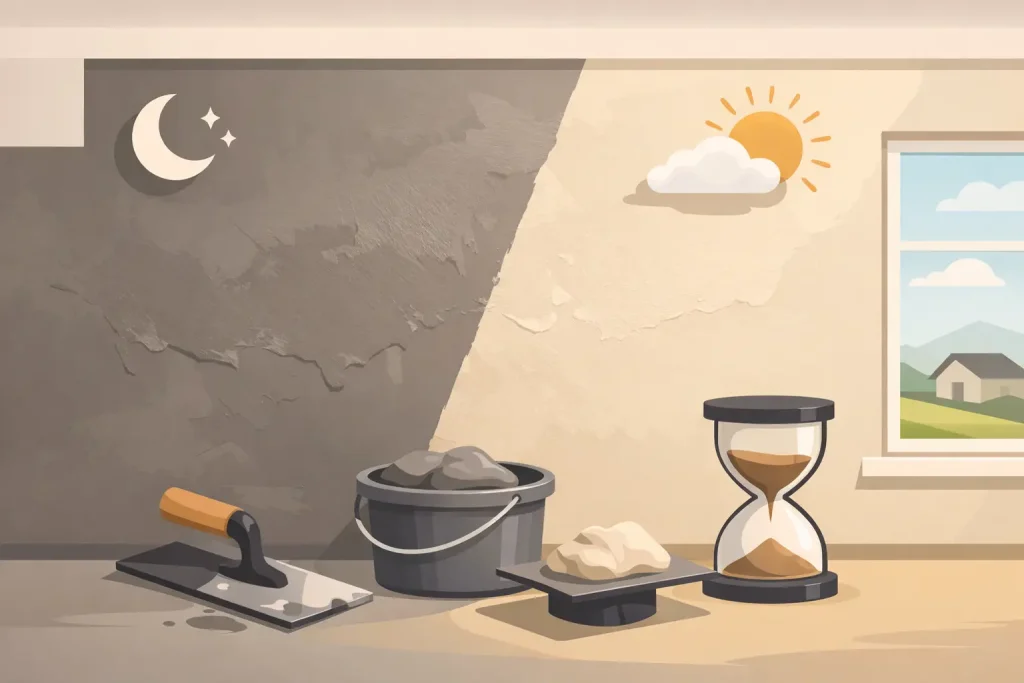
The easiest way to judge it is by colour rather than by the calendar. Fresh plaster starts out a dark pinkish brown and gradually dries to a much lighter, even pale pink. Once the whole area has changed colour consistently, with no darker damp patches left, it is normally ready for a mist coat.
That said, not all jobs are exactly the same. A small bedroom skimmed in mild weather will usually dry much faster than a large wall in an older property with limited ventilation.
What affects how long fresh plaster takes to dry?
Drying time is not just about the plaster itself. The room and the background surface matter just as much.
Thickness of the plaster
A thin skim coat dries faster than a thicker application. If a wall needed more backing work before the final finish, that extra material holds more moisture and naturally takes longer to dry. This is one reason a patched repair may dry at a different rate from a full wall.
Temperature in the room
Mild, steady warmth helps plaster dry at a sensible pace. Very cold rooms slow the process down. On the other hand, blasting the room with strong direct heat is not a good idea either, because it can force the surface to dry too quickly while moisture remains underneath.
Ventilation
Airflow helps moisture leave the room. Opening windows slightly and allowing fresh air to move through the space will usually help. A room that is shut up tight with damp air trapped inside will take longer.
Background surface
Plaster applied over plasterboard often dries more evenly than plaster applied over older walls with different levels of suction. Some backgrounds pull moisture out quickly, while others hold onto it. That can lead to patchy drying for a while, which is normal.
Weather and season
In summer, with warmer air and open windows, plaster usually dries faster. In winter, especially in older UK properties, it can take noticeably longer. Homes in colder parts of the year often have less natural ventilation as well, which adds time.
How to tell when plaster is dry enough to paint
The best sign is an even, pale colour across the whole surface. If you can still see darker patches, the plaster is still holding moisture and is not ready for painting.
It should also feel dry to the touch, though colour is usually the better guide. Do not rely on just one section of the wall. A ceiling edge, external wall or corner near a window may stay damp longer than the middle.
When it is fully dry, the first coat should be a mist coat, not standard full-strength emulsion straight from the tin. Fresh plaster is porous. A properly thinned first coat soaks in and bonds to the surface, giving you a much better base for your finish coats.
Can you speed up fresh plaster drying?
You can help it along, but you should not force it.
The right approach is gentle ventilation and moderate background warmth. Keep the room aired where possible, and if the heating is on, let it warm the property steadily rather than turning one room into an oven. This gives the plaster a fair chance to dry evenly.
What you want to avoid is intense heat from portable heaters pointed directly at the wall. That can lead to cracking, shrinkage or an uneven finish. It is a common mistake when people are in a hurry to get decorating done.
A dehumidifier can help in some cases, especially in colder months or in properties with poor airflow, but it should be used sensibly. It can remove excess moisture from the air without shocking the plaster surface.
Why plaster sometimes dries patchy
Patchy drying worries a lot of homeowners, but it is often completely normal. One area may turn pale quickly while another stays darker for days. That does not automatically mean anything has gone wrong.
Different suction levels in the background are a common reason. Older walls, repairs, corners and places near chimney breasts or window reveals can all behave differently. As long as the plaster has been applied properly, it usually evens out with time.
If a wall still looks unusually patchy after an extended drying period, or you are seeing staining rather than simple moisture variation, it may be worth checking for an underlying damp issue. That is a separate problem from normal drying.
Common mistakes after plastering
Most problems happen after the plasterer has left, not during the plastering itself. The biggest one is painting too soon. If moisture is still trapped, the paint can fail, peel or dry unevenly.
Another mistake is using full-strength paint as the first coat. Fresh plaster needs a mist coat first so the paint can key into the surface properly. Skipping that stage can leave you with poor adhesion and a finish that does not last.
Overheating the room is another one. People understandably want the job finished, especially during a renovation, but plaster needs a bit of patience. Gentle, natural drying is usually what gives the best result.
There is also the temptation to judge one small area and assume the whole room is ready. In practice, ceilings, external walls and repaired sections often dry at different speeds. Always check the full surface before decorating.
New plaster versus repaired patches
Small repairs can dry faster than a full skim, but not always. A patch that has been filled more deeply may actually stay darker longer than the surrounding wall. That catches people out because the area is smaller, so they assume it will be ready sooner.
With patch repairs, the edges can also dry at a different rate from the centre. Again, this is usually normal. What matters is waiting until the repair has dried through fully before sanding, painting or papering over it.
When to ask your plasterer for advice
If you are unsure, ask the person who did the job. A good plasterer will tell you what was applied, how thick it is, and what drying time to expect in your particular property. That is more useful than relying on a generic guess online.
At Lee Crane Plastering, we always prefer customers to wait a little longer rather than spoil a fresh finish by decorating too soon. Good plastering should look right when it is done, and it should still look right once painted.
A realistic drying timeline to expect
As a rough guide, a skimmed wall in fair conditions may start lightening within a day or two and be ready for a mist coat in 4 to 7 days. A thicker job or a colder room may take 7 to 10 days or more. That is not the plaster failing to dry. It is simply moisture taking longer to leave the surface.
If you are planning other work around plastering, build in a bit of flexibility. Decorating schedules often become tight, but allowing proper drying time saves hassle later. It is far easier to wait a few more days than to repaint or deal with a poor finish.
Fresh plaster does not need fussing over, but it does need a bit of respect. Let it dry naturally, watch for an even colour change, and do not rush the paint. A smooth wall is only half the job – giving it the right drying time is what helps that finish stay looking sharp.