
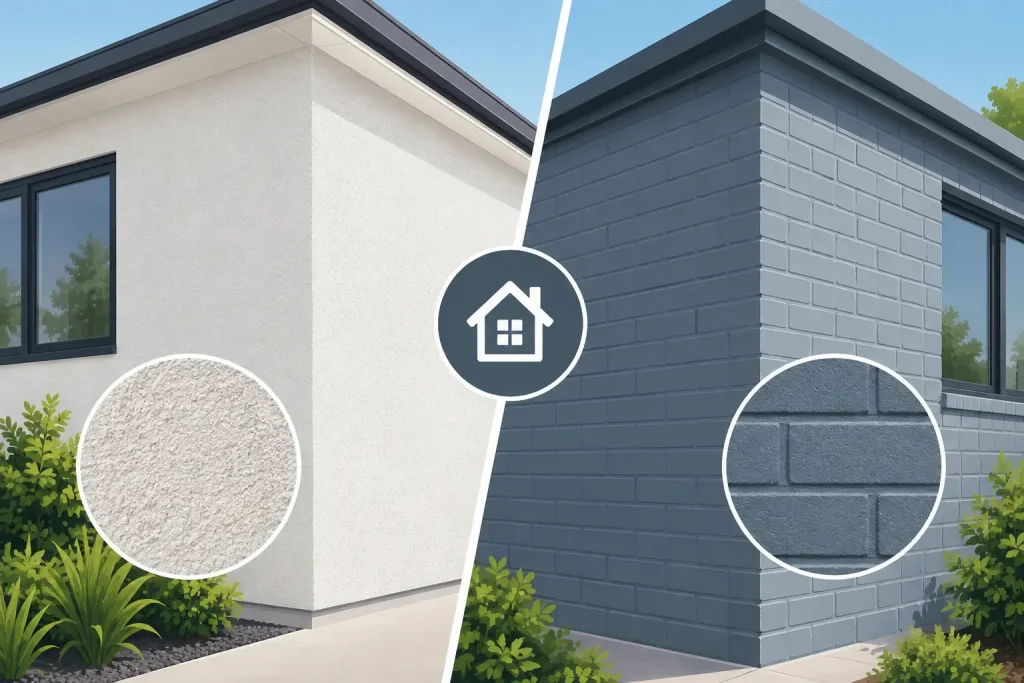
A tired brick elevation can make an otherwise well-kept property look neglected. When deciding between silicone render versus painted brick, the right answer is rarely just about which option looks better on day one. The condition of the existing walls, the level of exposure to the weather, the finish you want and how much maintenance you are prepared to take on all matter.
Both options can improve a property, but they work in very different ways. Painting keeps the brickwork visible and is usually the lower-cost route at the outset. Silicone render creates a new, uniform outer finish and can give a much more substantial change in appearance. A proper assessment of the walls should come before either choice.
Silicone render versus painted brick: the main difference
Painted brick is exactly what it sounds like: a suitable exterior masonry coating is applied directly to prepared brickwork. The joints, texture and character of the bricks remain visible beneath the paint. It can freshen up faded, mismatched or previously painted walls without changing the look of the building completely.
Silicone render is a coloured finish applied as part of a rendering system. It covers the brickwork, creating a clean, even surface in the chosen texture and colour. A properly specified system normally includes preparation work, base coats and reinforcing mesh where required, followed by the silicone finish coat. The detail in this preparation is what separates a durable job from one that soon shows problems.
If your brickwork is attractive and generally sound, paint may be enough. If the bricks are heavily patched, poorly matched after alterations, marked by old repairs or simply no longer suit the property, render can provide the more convincing transformation.
Appearance and kerb appeal
Painted brick retains the shape and feel of the original wall. This can be a benefit on homes where the brickwork is part of the character of the property. It is also useful if you want a straightforward colour change without making a permanent-looking alteration to the façade.
The downside is that paint does not hide much. Uneven brick colour is improved, but crooked lines, damaged faces, untidy repairs and inconsistent pointing can still be visible. Darker paint colours may also make surface imperfections more obvious in strong daylight.
Silicone render delivers a neater, more contemporary finish. It can bring separate additions, blocked-up openings and repaired sections together visually, making the property look more considered. There is a wide choice of colours, from clean whites and soft greys to warmer neutral shades, and the finish can be selected to suit the style of the house.
That said, render is not a way of covering over unresolved defects. Loose masonry, movement cracks, defective gutters and damp caused by leaking pipework need attention first. Applying any new finish over a failing background is a false economy.
Weather resistance and moisture management
This is where the quality of the materials and the condition of the wall become especially important. Exterior brick paint needs to be suitable for masonry and able to cope with rain, frost and temperature changes. Cheaper or incorrectly applied coatings can peel, blister or trap moisture where the wall is already struggling to dry.
Good-quality silicone render is designed to repel rainwater while allowing water vapour within the wall to escape. This water-repellent yet vapour-permeable quality is one reason it is popular for exposed elevations. It does not mean the wall is immune to problems, but it can help maintain a drier, cleaner exterior when the system is correctly chosen and installed.
Neither finish will solve penetrating damp from a cracked sill, failed flashing, overflowing gutter or damaged roofline. Those faults direct water into the building, and they should be repaired before decorating or rendering starts. A professional survey should identify these issues rather than simply covering the symptoms.
Maintenance: what will each finish need?
Painted brick needs regular inspection. South-facing and exposed walls can fade over time, while shaded elevations may develop algae or dirt staining. Small areas of failed paint can often be touched up, but patch repairs may show if the original colour has weathered.
As a general guide, exterior paint will need renewing more often than silicone render. The exact interval depends on the product, the preparation, the local environment and how exposed the property is. A wall facing driving rain in Essex will work harder than a sheltered rear elevation.
Silicone render has a lower-maintenance reputation because its surface is water-repellent, helping rainwater wash away some dirt. It can still become marked, particularly beneath overflowing gutters, around vegetation or in damp, shaded areas. Occasional gentle cleaning and keeping rainwater goods in good order will help preserve the finish.
Render can also be damaged by impact or movement. If a crack appears, it is worth finding out why before arranging a cosmetic repair. Matching a render texture and colour later is possible, but it is always better to protect the original finish through sound installation and routine maintenance.
Cost: initial spend versus long-term value
Painting brick is usually less expensive upfront because there is less material and labour involved. If the wall is clean, sound and already painted, preparation may be fairly straightforward. However, stripping unstable old paint, repairing damaged brickwork and carrying out access work can increase the cost quickly.
Silicone render costs more initially. It requires a higher level of preparation, skilled application and a complete compatible system. Scaffolding is often needed, especially where the finish is being applied across the full exterior of a house.
The longer-term comparison is not just about the quotation total. Ask how often the surface is likely to need attention, whether it will improve the presentation of the property, and whether it deals with existing visual problems properly. For a house with badly mismatched repairs or ageing painted masonry, investing in a full rendered finish can offer better value over time.
When painted brick makes more sense
Paint may be the sensible choice where the brickwork is in good condition and you want to retain its texture. It is also practical for a limited budget, a smaller area such as an extension, or a property that has already been painted successfully for years.
It is not always the right route for bare brickwork. Once brickwork is painted, it creates an ongoing decorating commitment. Returning it to its original appearance later can be difficult, time-consuming and may not produce an even result. This is worth considering before choosing a colour simply to follow a short-term trend.
When silicone render is the better option
Silicone render is often the stronger choice when appearance, weather protection and a more durable low-maintenance finish are the priority. It works particularly well for properties with unattractive brickwork, uneven previous repairs, older render that needs replacing or extensions that do not blend with the original house.
It can also be a good fit for landlords and homeowners planning a wider refurbishment, where a clean exterior helps bring the whole property up to standard. The key is making sure the background is stable and the work is carried out as a proper system rather than as a thin cosmetic coat.
At Lee Crane Plastering incorporating Eco Corkspray Solutions, the starting point is always the same: inspect the walls, understand what is causing the problem and recommend a finish that suits the building rather than forcing a one-size-fits-all answer.
The decision should start with the wall, not the colour chart
Choosing between silicone render and painted brick comes down to what the existing masonry needs. Paint is a straightforward option for sound brickwork that you still want to see. Silicone render is a more complete exterior upgrade where the wall needs a fresh, uniform finish with stronger resistance to the weather.
Before committing, have the property assessed properly, particularly if there are cracks, staining, loose surfaces or signs of water ingress. A well-prepared wall and a professionally applied finish will always matter more than the colour chosen at the end.